
Build an OSHA-aligned safety program, train your crews on the falls, struck-by, and electrical hazards that put workers in the ER, and document it all — in one platform. No safety manager required.
A 15-minute AI-assisted assessment finds your hazards, policy gaps, and training needs — with a prioritized action plan.
Generate OSHA-aligned safety programs and policies for your crews — in a few clicks, no consultant required.
50+ courses including Working at Height, Ladder Safety, and Hazard Communication — assign, track, and document with unlimited seats.
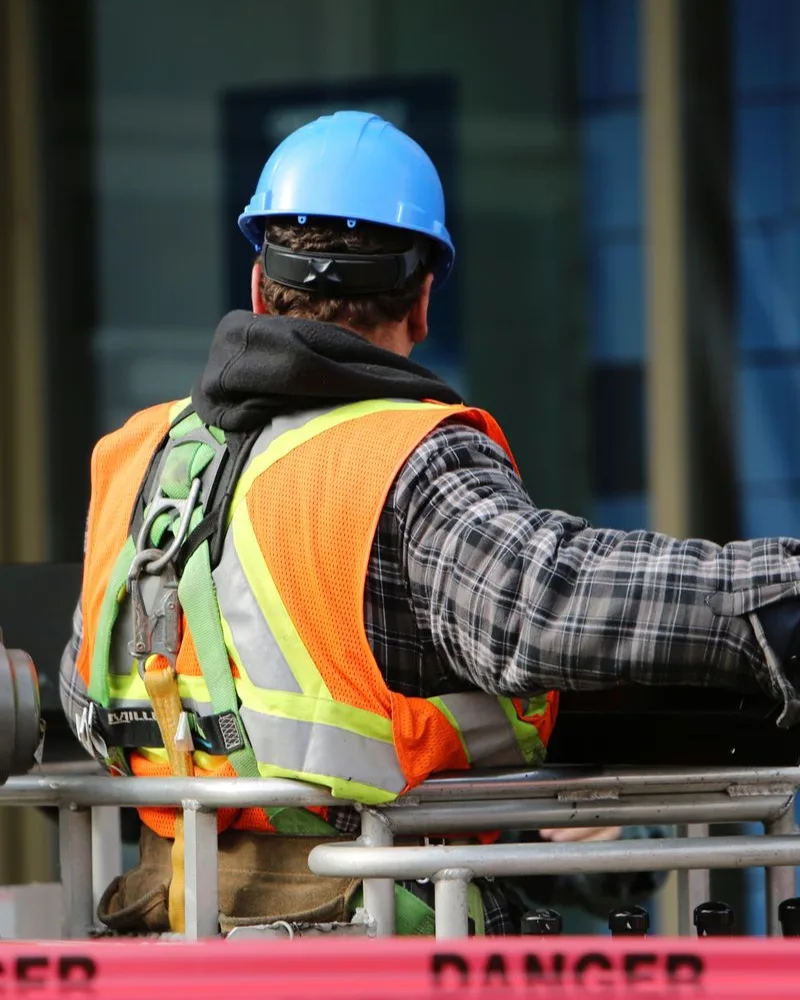
The hazards are concentrated — heights, heavy equipment, and live wires — and the fatality numbers show it, year after year.
Sources: BLS Census of Fatal Occupational Injuries (2023); OSHA Top 10 Most Frequently Cited Standards (FY2024).
OSHA’s “Fatal Four” and a few close relatives drive most construction deaths. Here’s what to watch — and what your safety program has to cover.
Roofs, scaffolds, and ladders make falls the #1 killer in construction — nearly 4 in 10 jobsite deaths and OSHA’s most-cited violation every year.
Falling tools, swinging loads, and moving equipment strike workers daily, making struck-by incidents one of construction’s deadliest Fatal Four hazards.
Overhead power lines, live wires, and unfinished wiring put electrical, HVAC, and general trades at constant risk of fatal shock.
Trench collapses, unguarded machinery, and pinch points can trap and crush workers in seconds, especially in excavation and plumbing work.
Improperly set, overloaded, or missing-guardrail access equipment sends contractors to the ER — a top OSHA citation across every trade.
Cutting concrete, welding, and soldering release silica dust and toxic fumes that scar lungs long after the job is done.
A jobsite packs the deadliest parts of industrial work into one changing environment: crews working at height, heavy equipment on the move, live wires and open trenches, and a site that looks different every single day. That combination is why construction recorded 1,075 fatal work injuries in 2023 — the highest total for the sector since 2011 and roughly one in five of all workplace deaths in America, according to the U.S. Bureau of Labor Statistics.
The encouraging part is that construction deaths are remarkably consistent. OSHA’s “Fatal Four” — falls, struck-by, electrocution, and caught-in/caught-between — drive the majority of them, and the same hazards show up in incident reports across general, electrical, plumbing, HVAC, and roofing work. That predictability is exactly what a structured safety program is built to attack, which is why contractors who run one see fewer injuries and lower workers’ comp costs.
There is no single “construction safety standard.” Instead, contractors have to comply with several OSHA rules at once:
Keeping all of that straight is the part most contractors struggle with, especially when the crew and the site change week to week. SmarterRisk’s Safety Program Builder generates OSHA-aligned policies in a few clicks, so nothing falls through the cracks.
Four hazards drive most construction deaths, and every trade faces them:
Falls are the single deadliest, tied to 421 deaths and about 39% of the sector’s fatalities in one year. Roofs, scaffolds, and ladders are the usual culprits. Guardrails, personal fall-arrest systems, and correct ladder setup are the fundamentals. SmarterRisk’s Working at Height and Ladder Safety courses train your crews and document that they’ve completed it.
Struck-by incidents come from falling tools, swinging loads, and moving equipment — hard hats, tool tethers, and traffic control keep workers out of the line of fire.
Electrocution threatens electrical, HVAC, and general trades through overhead lines, live wires, and unfinished wiring. Lockout/tagout, ground-fault protection, and safe clearances prevent fatal shocks; the Electrical Safety course covers the essentials.
Caught-in/caught-between hazards — trench collapses, unguarded machinery, and pinch points — can trap and crush a worker in seconds. Protective systems for excavations and guarding on equipment are non-negotiable.
Use this as a starting point for a walk of your jobsite:
SmarterRisk turns a walk like this into a scored assessment with a prioritized action plan — a living record you can act on and share, instead of a clipboard nobody looks at again.
Most contractors don’t have a full-time safety manager, and traditional consultants cost thousands. That’s the gap SmarterRisk closes. In about 15 minutes, an AI-assisted assessment identifies your specific hazards, generates your OSHA-aligned policies, assigns the right training from a library of 50+ courses, and documents your controls with photo verification. Your safety score updates in real time, and a one-click Risk Report shows your agent and carrier that you’re actively managing risk — the very thing that lowers your workers’ comp costs over time.
Safety isn’t just a compliance box. OSHA estimates employers save $4–$6 for every $1 spent on it, and a landmark Ohio Bureau of Workers’ Compensation study found structured programs cut claim costs by over 80%. In an industry with thin margins and a workforce that’s hard to replace, that’s the difference between one bad year that follows your experience mod for three — and a jobsite where everyone goes home safe. Run your numbers or start a free assessment to see where you stand.
Everything a contractor needs to prevent injuries and prove it — without hiring a safety manager.
A 15-minute AI-assisted assessment finds your hazards, policy gaps, and training needs, then builds a prioritized action plan.
Generate the OSHA-aligned safety programs and policies your crews need — in a few clicks, no consultant required.
Assign Working at Height, Ladder Safety, Electrical Safety, Hazard Communication, and 50+ more courses. Track completion and document it.
Photo-verify controls, watch your safety score rise, and export a Risk Report your carrier recognizes.
Your Intelligent Plan covers the whole safety program — for less than the cost of one injury.
The Fatal Four are the four hazards behind most construction deaths: falls from heights, struck-by objects, electrocution, and caught-in/caught-between incidents like trench collapses. Falls alone cause about 39% of the sector’s fatalities. SmarterRisk’s program builder helps you target all four.
OSHA requires training tied to the hazards on your site — fall protection, ladders and scaffolds, electrical safety, hazard communication, respiratory protection for silica, and trenching where it applies, among others. SmarterRisk’s Training Director covers 50+ courses so you can assign, track, and document each one.
Construction recorded 1,075 fatal work injuries in 2023 — the highest total for the sector since 2011 and roughly 20% of all U.S. workplace deaths, according to the BLS Census of Fatal Occupational Injuries. Falls, slips, and trips accounted for about 39% of those deaths.
Fall Protection — General Requirements (29 CFR 1926.501) is OSHA’s #1 most-cited standard, with 6,307 citations in FY2024 — the 14th consecutive year at the top. Ladders and scaffolding citations follow close behind. SmarterRisk includes a Working at Height course to help you address it.
Fall protection at height, ladders and scaffolds inspected, electrical hazards controlled, trenches protected, silica and respiratory controls in place, PPE worn, and current training records for every worker. SmarterRisk turns that walk into a scored assessment with a prioritized action plan.
Assess your hazards, write the required policies, train your crews, and document everything. OSHA estimates $4–$6 saved for every $1 spent on safety, and a landmark Ohio BWC study found structured programs cut claim costs by over 80%. Try the Safety ROI Calculator.
Run a free 15-minute assessment, build your OSHA-aligned program, and train your crews. No credit card, no safety manager required.