
Build an OSHA-aligned safety program, train housekeeping, kitchen, maintenance, and front-desk staff on the injuries that actually happen, and document it all — in one platform. No safety manager required.
A 15-minute AI-assisted assessment finds your hazards, policy gaps, and training needs — with a prioritized action plan.
Generate OSHA-aligned safety programs and policies for your hotel — in a few clicks, no consultant required.
50+ courses including Ergonomics, Slips & Falls, and Hazard Communication — assign, track, and document with unlimited seats.
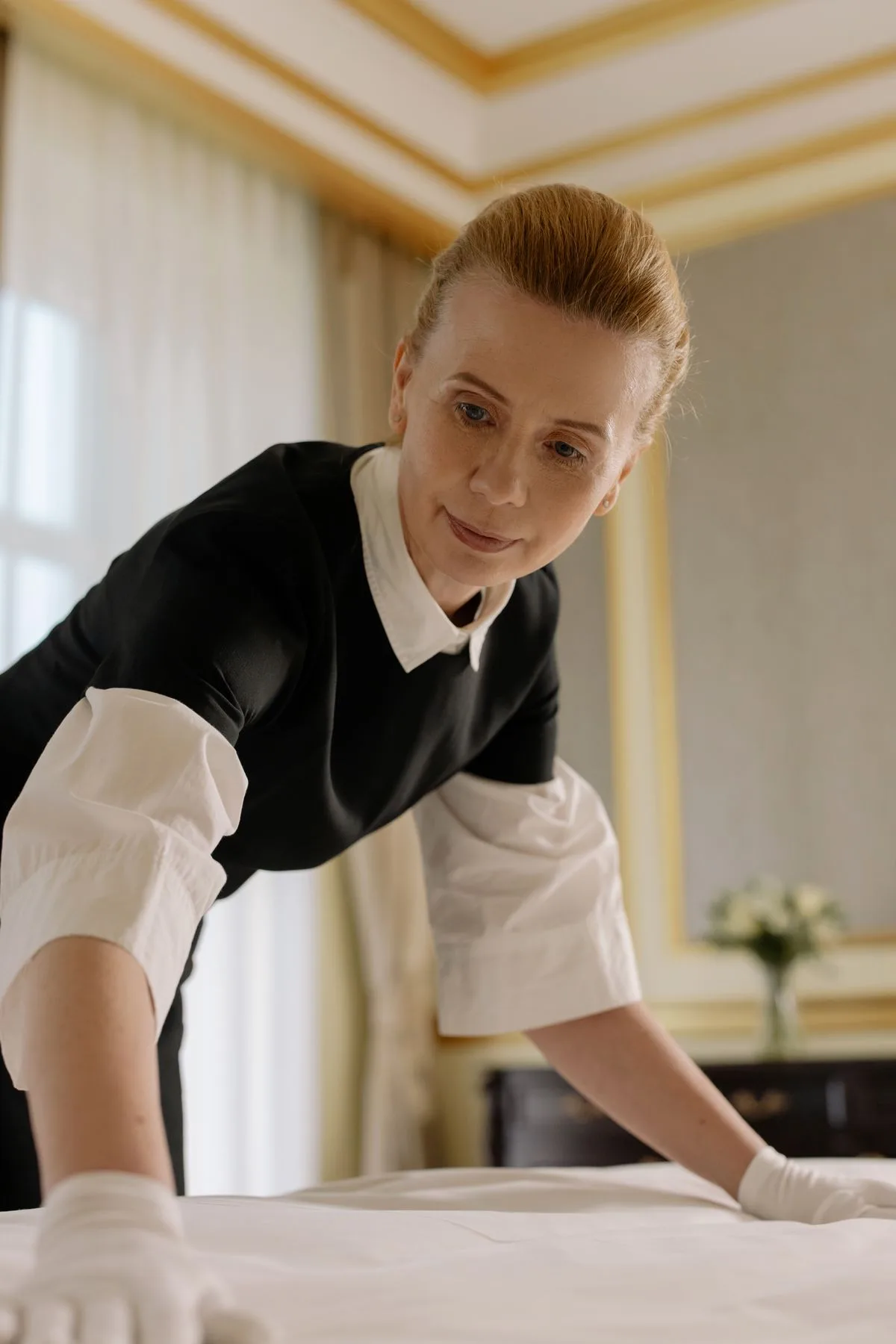
Housekeeping, kitchen, maintenance, and front desk each carry their own risks — and the injury numbers, led by housekeepers, add up fast.
Sources: Buchanan et al., ‘Occupational Injury Disparities in the US Hotel Industry,’ American Journal of Industrial Medicine 53:116–125 (2010, OSHA 300 log data); systematic review of MSD prevalence among hotel housekeepers (2024); hospitality injury analysis tracing to BLS injury data; OSHA.
The same handful of hazards drives most hotel injuries, department by department. Here’s what to watch — and what your safety program has to cover.
Repetitive lifting mattresses, scrubbing, bending, and reaching gives housekeepers the highest strain-injury rate in the hotel. Ergonomic technique and workload limits prevent it.
Wet bathroom tile, freshly mopped lobbies, and cluttered back-of-house corridors cause roughly a quarter of all hospitality injuries. Slip-resistant shoes and fast cleanup keep people upright.
Disinfectants, bleach, and degreasers cause skin burns and respiratory harm when mixed, mislabeled, or used without ventilation. Labels, safety data sheets, and a Hazard Communication program keep staff safe.
Hot surfaces, fryer oil, knives, and slick greasy floors make the hotel kitchen one of the highest-hazard zones on property. Splash guards, cut gloves, and hot-oil procedures matter.
Heavy linen and supply carts on carpet and thresholds strain backs, shoulders, and wrists across every shift. Lighter loads and better cart design help.
Ladder falls, lockout/tagout gaps, and live wiring during repairs expose maintenance staff to serious injury. Fall protection and energy control are non-negotiable.
A hotel looks calm from the lobby, but behind the scenes it’s four different high-hazard workplaces under one roof. Housekeeping lifts mattresses and scrubs bathrooms all day, the kitchen runs hot and wet with knives and fryer oil, maintenance climbs ladders and opens live panels, and the front desk stands on floors that never stop getting mopped. Each department carries its own risks, and injuries in one rarely look like injuries in another.
The workers who pay the highest price are housekeepers. Research built on OSHA 300 logs from 50 large U.S. hotels found housekeepers had an injury rate of 7.9 per 100 worker-years — the highest of any hotel job and well above the 5.2 hotel-wide average — along with the highest musculoskeletal injury rate on the property. The encouraging part is that these injuries are predictable, and predictable means preventable. The same strains, slips, and burns show up again and again, which is exactly what a structured safety program is built to attack.
There is no single “hotel safety standard.” Instead, hotels have to comply with several OSHA rules at once:
Keeping all of that straight across departments is the hard part for a busy operator. SmarterRisk’s Safety Program Builder generates OSHA-aligned policies in a few clicks, so nothing gets missed.
Three hazards drive most hotel injuries, and housekeeping sits at the center of all three.
Musculoskeletal strain is the signature hotel injury. Lifting mattresses, scrubbing tile, bending to make beds, and pushing loaded carts add up shift after shift — 53.9% of housekeepers report low-back pain, with shoulders and wrists close behind. Ergonomic technique, lighter linens, and workload limits are the highest-leverage fixes.
Slips, trips, and falls account for roughly a quarter of all hospitality injuries, from wet bathroom tile and freshly mopped lobbies to cluttered back-of-house corridors. Slip-resistant shoes, “wet floor” signage, and immediate cleanup keep people upright.
Chemical exposure comes from the disinfectants, bleach, and degreasers housekeeping uses all day — dangerous when mixed, mislabeled, or used without ventilation. SmarterRisk includes an Ergonomics course, a Slips, Trips & Falls course, and a Hazard Communication course to train your team on all three — and document that they’ve completed it.
Use this as a starting point for a walk of your property:
SmarterRisk turns a walk like this into a scored assessment with a prioritized action plan — a living record you can act on and share, instead of a clipboard nobody looks at again.
Most hotels don’t have a dedicated safety manager, and traditional consultants cost thousands. That’s the gap SmarterRisk closes. In about 15 minutes, an AI-assisted assessment identifies your specific hazards across housekeeping, kitchen, maintenance, and front desk, generates your OSHA-aligned policies, assigns the right training from a library of 50+ courses, and documents your controls with photo verification. Your safety score updates in real time, and a one-click Risk Report shows your agent and carrier that you’re actively managing risk — the very thing that lowers your workers’ comp costs over time.
Safety isn’t just a compliance box. OSHA estimates employers save $4–$6 for every $1 spent on it, and a landmark Ohio Bureau of Workers’ Compensation study found structured programs cut claim costs by over 80%. In an industry with thin margins and high turnover, that’s the difference between injuries that eat your profit — and a property where every department stays safe. Run your numbers or start a free assessment to see where you stand.
Everything a hotel needs to prevent injuries and prove it — without hiring a safety manager.
A 15-minute AI-assisted assessment finds your hazards, policy gaps, and training needs, then builds a prioritized action plan.
Generate the OSHA-aligned safety programs and policies your hotel needs — in a few clicks, no consultant required.
Assign Ergonomics, Slips & Falls, PPE, Hazard Communication, and 50+ more courses. Track completion and document it.
Photo-verify controls, watch your safety score rise, and export a Risk Report your carrier recognizes.
Your Intelligent Plan covers the whole safety program — for less than the cost of one injury.
Musculoskeletal strains lead the list — especially among housekeepers, who carry the highest injury rate of any hotel job. Slips, trips and falls on wet floors, chemical exposure from cleaning products, kitchen burns and cuts, and maintenance injuries round it out. Low-back, shoulder, and wrist strains are the most reported.
There is no single ‘hotel’ standard — hotels fall under several: Hazard Communication (1910.1200) for cleaning chemicals, Walking-Working Surfaces (1910.22) for slips and falls, PPE (1910.132), Lockout/Tagout (1910.147) for maintenance, Emergency Action Plans (1910.38), and Bloodborne Pathogens (1910.1030) for staff handling contaminated linens. SmarterRisk’s program builder generates OSHA-aligned policies that cover them.
Housekeeping injuries come mostly from repetitive lifting, bending, scrubbing, and pushing heavy carts. Teach ergonomic technique, use fitted-sheet and lightweight-linen methods, limit rooms per shift where possible, provide better carts, and rotate tasks. SmarterRisk includes an Ergonomics course you can assign and document.
By department: housekeeping faces musculoskeletal strain and chemical exposure; the kitchen faces burns, cuts, and greasy-floor slips; maintenance faces ladder falls and electrical hazards; and the front of house faces slips on wet lobby floors. Strains and falls send the most hotel workers to the doctor.
Ergonomics and safe cart-pushing for housekeeping, slip prevention on floors and stairs, chemical labeling and safety data sheets (HazCom), kitchen burn and cut controls, ladder and lockout/tagout for maintenance, clear exits and a fire plan, PPE, and current training records for every employee. SmarterRisk turns that walk into a scored assessment with an action plan.
Housekeeping combines the most physically demanding tasks in the building — lifting mattresses, scrubbing bathrooms, bending and reaching hundreds of times a shift, and pushing heavy carts — often under tight room quotas. OSHA 300 log research found housekeepers carry the highest overall and musculoskeletal injury rates of any hotel job.
Run a free 15-minute assessment, build your OSHA-aligned program, and train every department. No credit card, no safety manager required.