
Build an OSHA-aligned safety program, train your crew on the machines and hazards that actually cause injuries, and document it all — in one platform. No safety manager required.
A 15-minute AI-assisted assessment finds your hazards, policy gaps, and training needs — with a prioritized action plan.
Generate OSHA-aligned safety programs and policies for your shop — in a few clicks, no consultant required.
50+ courses including Machine Guarding, Lockout/Tagout, and Hazard Communication — assign, track, and document with unlimited seats.
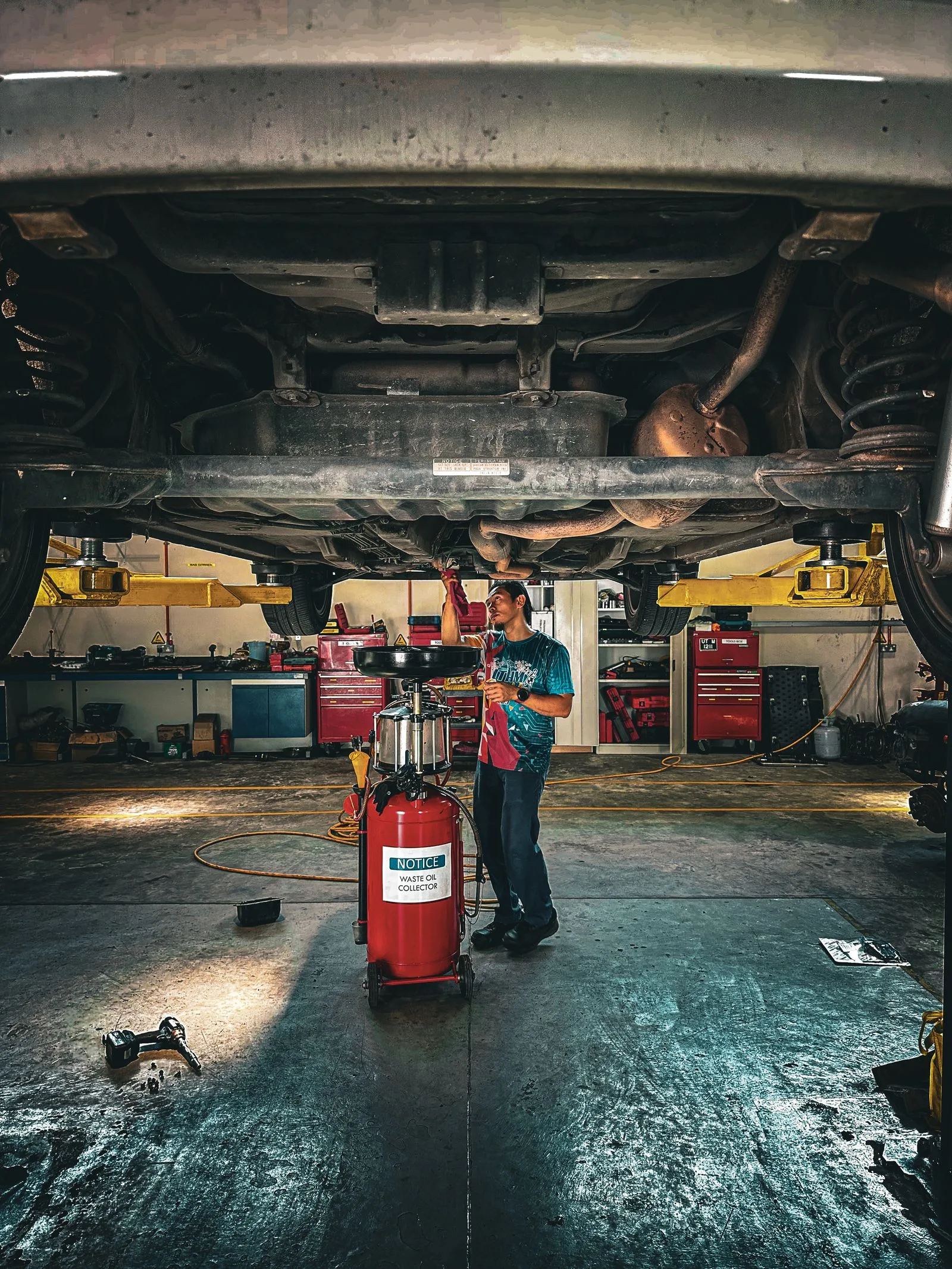
Auto, machine, and welding shops run on powerful equipment, sparks, and heavy parts — and the injury numbers show it.
Sources: U.S. Bureau of Labor Statistics — Survey of Occupational Injuries & Illnesses (Automotive Service Technicians, 2020) and Census of Fatal Occupational Injuries (Contact with Objects & Equipment, 2023); NIOSH / OSHA (Welding, Cutting, and Brazing; welder employment via BLS Occupational Employment Statistics).
The same handful of hazards drives most shop injuries. Here’s what to watch — and what your safety program has to cover.
Lathes, grinders, saws, presses, and drills with defeated or missing guards are the top cause of shop amputations and crush injuries.
Falling parts, kickback, flying debris, and rotating equipment make contact-with-objects the leading source of days-away-from-work injuries.
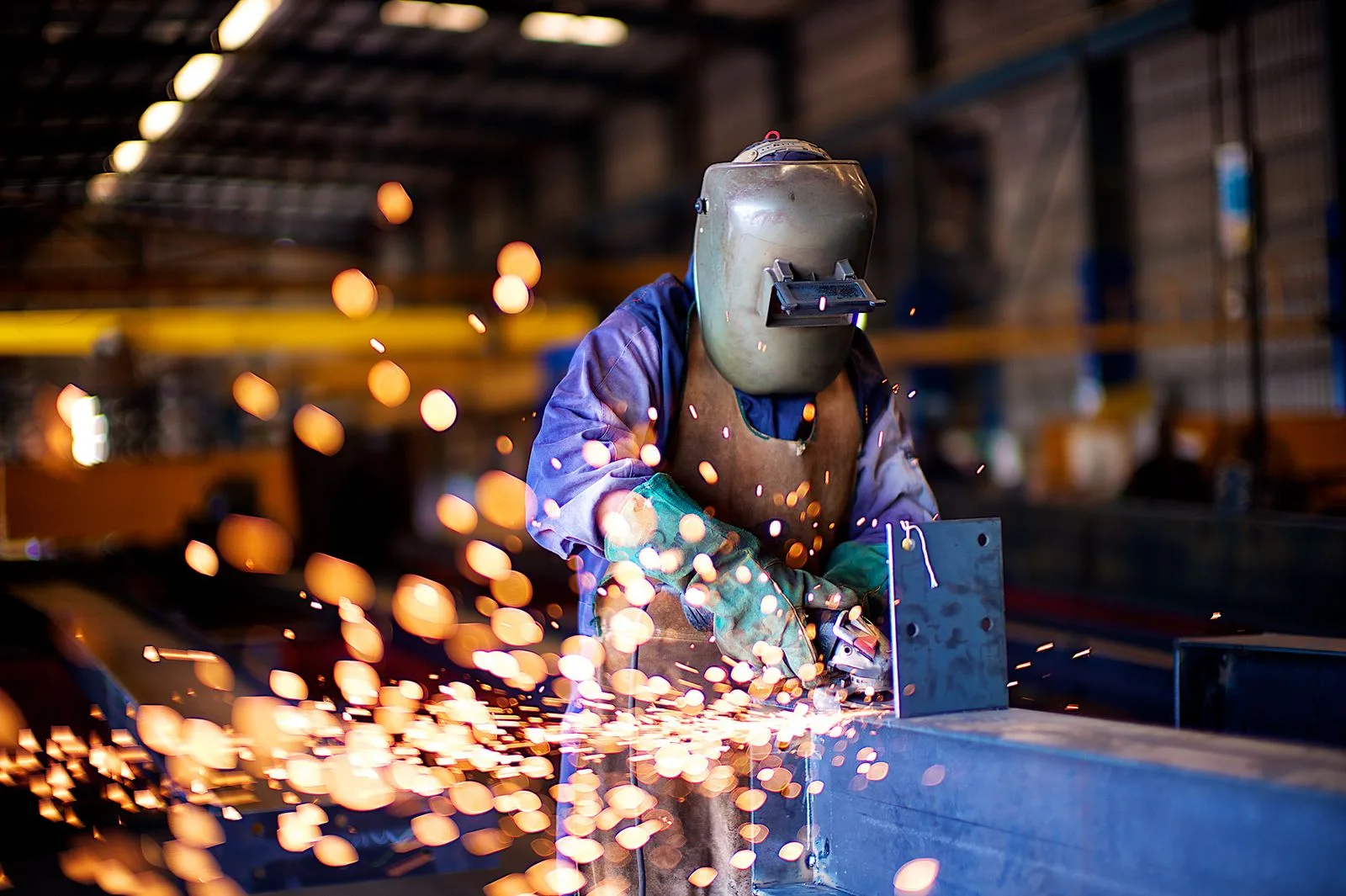
Welding, cutting, and grinding throw sparks near fuels, oxygen, and rags, turning any shop into a burn and fire risk in seconds.
Welding fume, solvent vapors, and exhaust build up fast; OSHA links welding fume to a sharply higher lung-cancer risk without exhaust control.
Live power tools, damaged cords, and machines serviced without lockout/tagout expose workers to shock, arc flash, and unexpected start-up.
Oil slicks, coolant spills, hoses, and cluttered floors turn a busy shop into a fall and same-level injury zone.
A hands-on shop — auto repair, machine, welding and fabrication, or a small trade shop — concentrates hazards that most workplaces never see together: powerful rotating machinery, razor-edged tooling, showers of sparks, live electrical tools, heavy parts overhead, and floors slick with oil and coolant. That mix is why automotive service technicians and mechanics are injured at a rate of 185.9 per 10,000 full-time workers, well above the private-industry average, according to the U.S. Bureau of Labor Statistics.
The encouraging part is that shop injuries are remarkably consistent — the same amputations, struck-by incidents, burns, and falls show up in incident logs again and again. Contact with objects and equipment alone killed 756 workers in a single year and drives more days-away-from-work injuries than any other cause. That predictability is exactly what a structured safety program is built to attack, which is why shops that run one see dramatically fewer claims.
There is no single “shop safety standard.” Instead, shops have to meet several OSHA requirements at once:
Keeping all of that straight is the hard part for a busy shop owner. SmarterRisk’s Safety Program Builder generates OSHA-aligned policies in a few clicks, so nothing gets missed.
A few hazards drive the vast majority of shop injuries:
Unguarded machinery is the top cause of the most serious shop injuries. Lathes, grinders, saws, and presses with missing or defeated guards cause amputations and crush injuries in an instant — and clearing a jam without locking out energy is how many of them happen. Guards in place plus disciplined lockout/tagout are the fundamentals.
Fire, sparks, and fumes come from welding, cutting, and grinding. Sparks near fuels, oxygen, and oily rags start fires in seconds, and OSHA and NIOSH flag welding fume — including hexavalent chromium and manganese — as a serious respiratory hazard tied to higher lung-cancer risk. Hot-work discipline, a fire watch, and local exhaust ventilation make the difference.
Struck-by and caught-in hazards — kickback, flying debris, and falling parts — round out the big risks. SmarterRisk includes a Machine Guarding course and a Hand and Power Tool Safety course to train your crew on all of it — and document that they’ve completed it.
Use this as a starting point for a walk of your shop floor:
SmarterRisk turns a walk like this into a scored assessment with a prioritized action plan — a living record you can act on and share, instead of a clipboard nobody looks at again.
Most small shops don’t have a safety manager, and traditional consultants cost thousands. That’s the gap SmarterRisk closes. In about 15 minutes, an AI-assisted assessment identifies your specific hazards, generates your OSHA-aligned policies, assigns the right training from a library of 50+ courses, and documents your controls with photo verification. Your safety score updates in real time, and a one-click Risk Report shows your agent and carrier that you’re actively managing risk — the very thing that lowers your workers’ comp costs over time.
Safety isn’t just a compliance box. OSHA estimates employers save $4–$6 for every $1 spent on it, and a landmark Ohio Bureau of Workers’ Compensation study found structured programs cut claim costs by over 80%. For a shop running on tight margins and skilled hands you can’t easily replace, that’s the difference between one bad injury that follows you for three years — and a floor where everyone goes home safe. Run your numbers or start a free assessment to see where you stand.
Everything a shop needs to prevent injuries and prove it — without hiring a safety manager.
A 15-minute AI-assisted assessment finds your hazards, policy gaps, and training needs, then builds a prioritized action plan.
Generate the OSHA-aligned safety programs and policies your shop needs — in a few clicks, no consultant required.
Assign Machine Guarding, Lockout/Tagout, Hazard Communication, and 50+ more courses. Track completion and document it.
Photo-verify controls, watch your safety score rise, and export a Risk Report your carrier recognizes.
Your Intelligent Plan covers the whole safety program — for less than the cost of one injury.
Unguarded machinery and amputations, struck-by and caught-in injuries from falling parts and rotating equipment, fire and burns from welding and grinding sparks, toxic fumes from welding and solvents, electrical and lockout/tagout failures, and slips on oil and coolant. Contact with machinery and objects sends the most shop workers to the ER.
There is no single ‘shop’ standard — shops fall under several: Machine Guarding (1910.212), Lockout/Tagout (1910.147), Hazard Communication (1910.1200), Hand & Portable Powered Tools (1910.242), Welding, Cutting & Brazing (1910.252), PPE (1910.132), and Respiratory Protection (1910.134), among others. SmarterRisk’s program builder generates OSHA-aligned policies that cover them.
Shop workers need training on machine guarding, lockout/tagout, hand and power tools, hazard communication for solvents and fuels, PPE, and hot-work procedures for welding and cutting. SmarterRisk’s Training Director includes Machine Guarding, Lockout/Tagout, and 50+ more courses you can assign, track, and document with unlimited seats.
It depends on the task, but shops commonly require safety glasses or face shields, hearing protection, cut- and heat-resistant gloves, welding helmets and leathers, respiratory protection where fumes are present, and safety footwear. OSHA requires a hazard assessment to determine what each job needs. SmarterRisk includes a PPE course you can assign and document.
Keep guards in place on lathes, grinders, saws, and presses; never bypass or defeat them; and lock out and tag out energy before any service or clearing of a jam. Train every operator before they run a machine. SmarterRisk includes Machine Guarding and Lockout/Tagout courses to train your crew and keep a documented record.
Machine guards in place and inspected, lockout/tagout followed for service, hand and power tools maintained, hot-work and fire controls ready, HazCom labels and safety data sheets accessible, ventilation and PPE in use, floors clear of oil and clutter, and current training records for every worker. SmarterRisk turns that walk into a scored assessment with a prioritized action plan.
Run a free 15-minute assessment, build your OSHA-aligned program, and train your crew. No credit card, no safety manager required.