Bloodborne Pathogens Safety Training
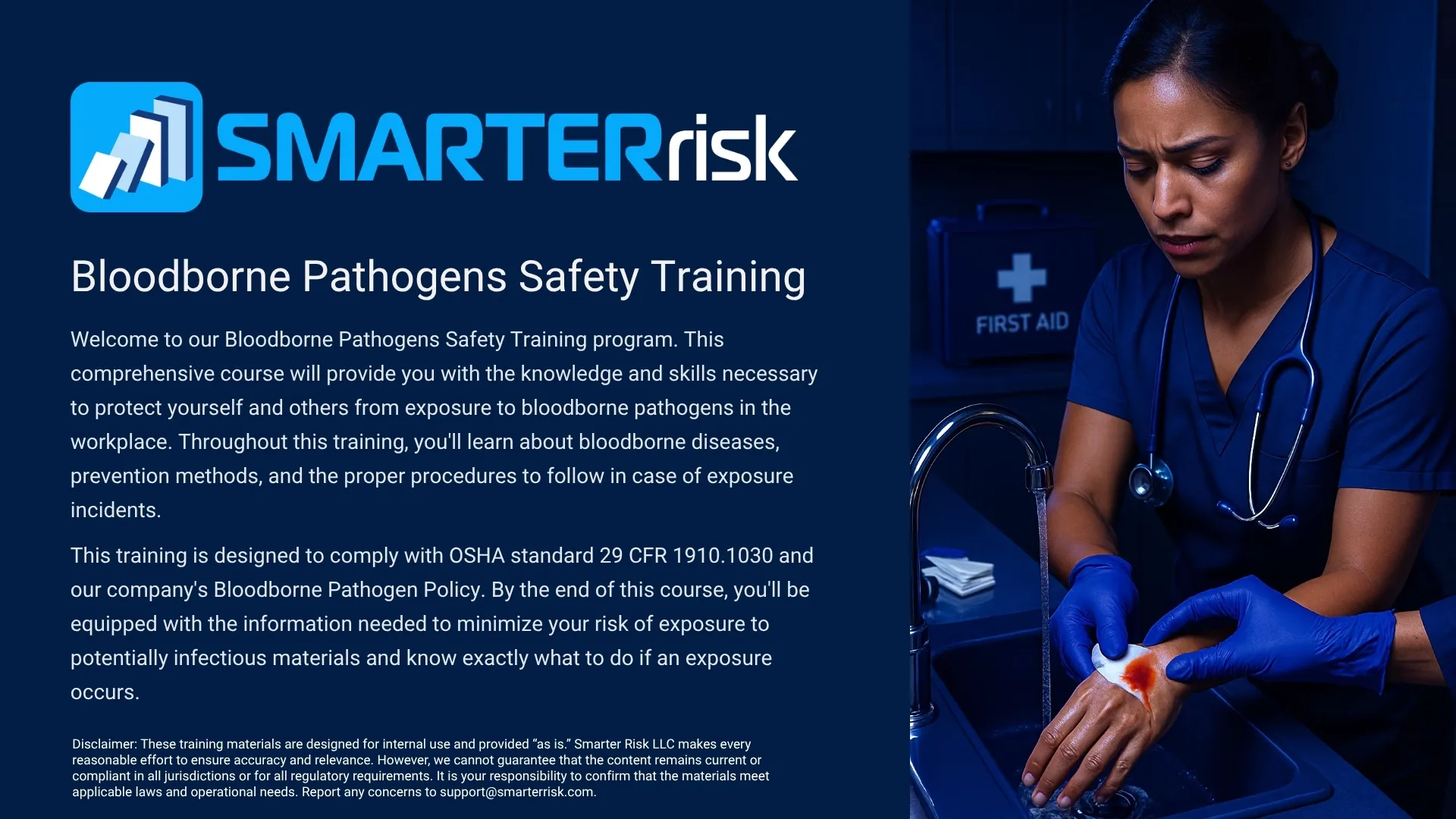
This course provides employees with the essential knowledge required to recognize, prevent, and respond to bloodborne pathogen exposure in the workplace. It is designed to meet OSHA 29 CFR 1910.1030 requirements and align with standard Exposure Control Plans.
Employees learn practical guidance on transmission risks, including direct and indirect contact, step-by-step instruction on universal precautions, safe work practices, and proper PPE use. The training covers correct procedures for cleaning blood and bodily fluid spills, disposing of biohazard waste, and taking clear actions following an exposure incident.
This comprehensive training ensures employees understand their rights related to vaccination, medical confidentiality, and recordkeeping. Participants gain the confidence to act safely and in compliance with OSHA requirements—reducing risk, protecting health, and supporting a safer workplace.
After completing this course, employees will be prepared to recognize bloodborne pathogen hazards, apply universal precautions consistently, use appropriate PPE, respond correctly to exposure incidents, and understand their rights and employer responsibilities under OSHA regulations.
What You’ll Learn
- Bloodborne Pathogen Basics - Understand what bloodborne pathogens are and where exposure can occur in your workplace
- Disease Recognition - Identify common bloodborne diseases including HBV, HCV, and HIV
- Transmission Prevention - Recognize direct and indirect contact risks and how to prevent transmission
- Universal Precautions - Apply standard precautions to treat all blood and bodily fluids as potentially infectious
- PPE Selection and Use - Select, properly use, and dispose of personal protective equipment
- Safe Work Practices - Implement proper handwashing, hygiene, and contamination prevention techniques
- Sharps Safety - Handle and dispose of needles, broken glass, and other sharps safely
- Spill Response - Clean up blood and bodily fluid spills using proper procedures and materials
- Exposure Response - Take immediate action following an exposure incident, including reporting and medical evaluation
- Employee Rights - Understand vaccination rights, medical confidentiality, and OSHA recordkeeping requirements
Course Details
Duration: 30 minutes
Format: Self Paced Online Training
Assessment: Knowledge quiz with immediate feedback
Certification: Certificate of completion upon passing
Access: Available 24/7 through Training Director LMS
Who Should Take This Course
- First aid responders and emergency response team members
- Custodial and maintenance staff
- Security personnel
- Healthcare workers and medical office staff
- Supervisors and managers responsible for safety compliance
- Any employee with potential occupational exposure to blood or bodily fluids
Key Topics Covered
This training addresses OSHA 29 CFR 1910.1030 requirements:
- Common bloodborne diseases - HBV, HCV, HIV transmission and prevention
- Potentially infectious materials (OPIM) - Recognition and handling
- Personal Protective Equipment (PPE) - Selection, use, and disposal
- Sharps handling and disposal - Safe practices and engineering controls
- Handwashing and hygiene - Best practices for contamination prevention
- Hepatitis B vaccination - Employee rights and employer requirements
- Exposure incident response - Immediate actions and post-exposure follow-up
- OSHA documentation - Record retention and compliance requirements
- Exposure Control Plans - Understanding your workplace plan
- Engineering and work practice controls - Reducing exposure risk
Frequently Asked Questions
How long does the training take?
The course takes approximately 30 minutes to complete. Employees can complete it in one session or break it into segments at their convenience.
Is this training OSHA compliant?
This training is designed to help companies meet OSHA 29 CFR 1910.1030 requirements for bloodborne pathogens training.
Do employees receive a certificate?
Yes. Upon successful completion, employees can generate a certificate of completion. All progress is stored and accessible in the main dashboard under Learner Report.
How often should employees take this training?
OSHA requires annual bloodborne pathogens training for all employees with occupational exposure. Additional training is required when job tasks change or new procedures are introduced.
Does this training cover Hepatitis B vaccination?
Yes. The course covers employee rights to Hepatitis B vaccination, employer responsibilities, and the vaccination declination process.
Can we customize this for our Exposure Control Plan?
While the core content is standardized to meet OSHA requirements, the principles taught align with any compliant Exposure Control Plan. Supplement with site-specific procedures as needed.
Get Started
Bloodborne Pathogens Safety Training is included with the Intelligent Plan.
- Sign up - You can begin on the free plan and upgrade when you’re ready to assign courses.
- Complete the company risk assessment (required) - It takes less than 15 minutes. Answer all questions as accurately as possible so we can set up your account correctly.
- Access your dashboard - After submitting the assessment, you’ll be redirected to your dashboard.
- Click Training Director - Start assigning courses to your team.
Related Resources
Related Training Courses
- Basic First Aid for Employees - Essential first aid skills for workplace emergencies
- Emergency Action Plan Training - Emergency procedures and response planning
- Building a Strong Safety Culture - Creating organizational commitment to safety
Related Blog Posts
- Bloodborne Pathogen Policy: Essential Workplace Safety Guide - Comprehensive guide to developing and implementing bloodborne pathogen policies
- Emergency Action Plan: Essential Guide for Workplace Preparedness - Emergency planning and response procedures
Related Toolbox Talks
- Bloodborne Pathogens: Workplace Safety and Prevention - Quick reference guide for bloodborne pathogen safety
- First Aid Basics for the Jobsite - Essential first aid skills and emergency response