Compressed Gas Cylinder Safety Training: Storage, Handling & Transportation
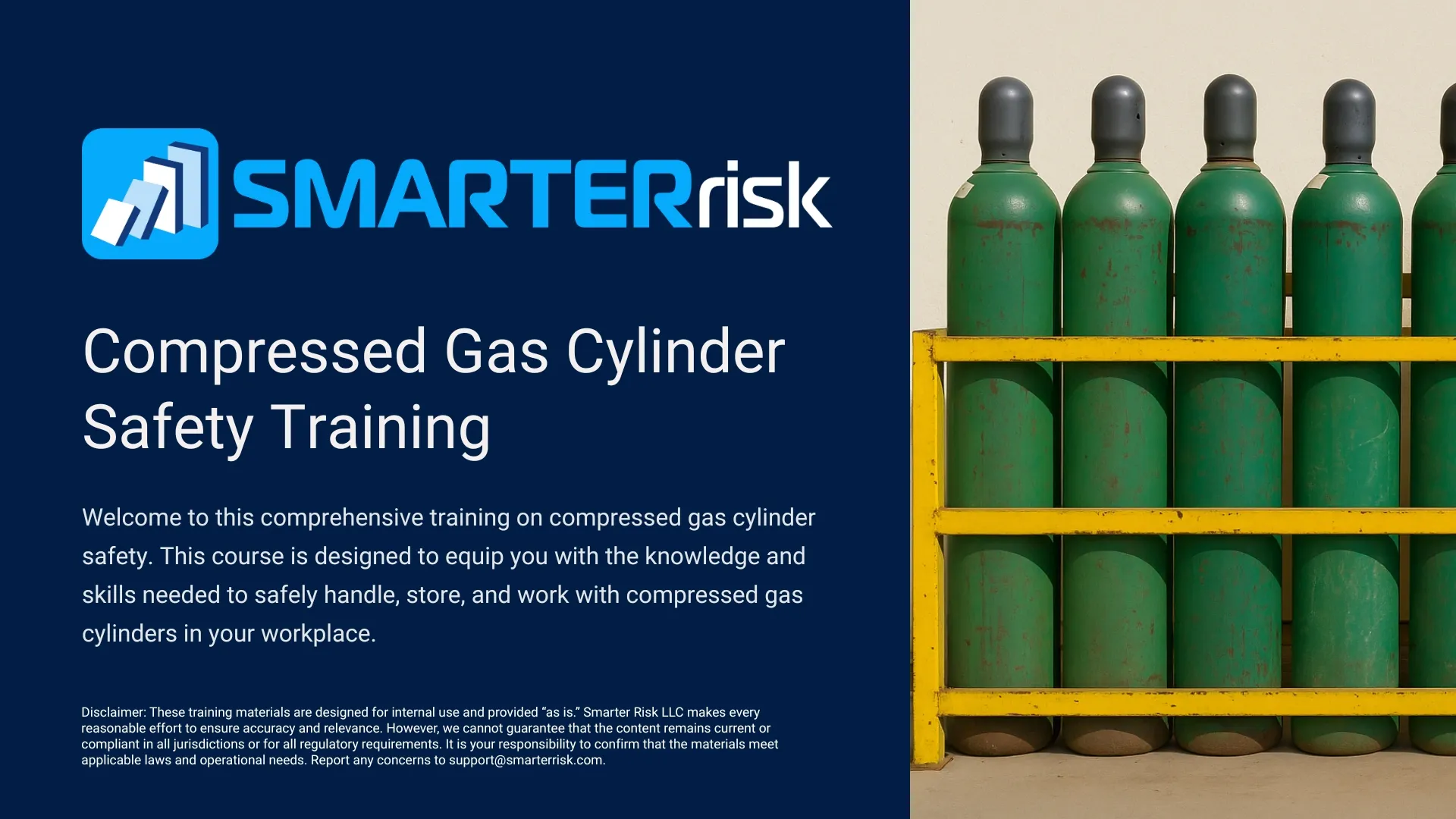
Compressed gas cylinders are used across many industries—but when they are not handled, stored, or transported correctly, they pose serious risks including explosions, fires, toxic exposure, and serious injuries. This Compressed Gas Cylinder Safety Training provides employees with the essential knowledge needed to safely work with compressed gas cylinders, reduce workplace hazards, and support regulatory compliance.
This course focuses on compressed gas cylinder safety, emphasizing proper compressed gas cylinder storage, handling, labeling, transportation, and inspection practices. Employees will learn how to recognize common compressed gas cylinder hazards, identify cylinders correctly, and follow safe work procedures that help prevent incidents before they occur.
The training is designed to support workplace safety programs and aligns with OSHA expectations for compressed gas safety under applicable standards. It is appropriate for environments where compressed gases are stored, moved, or used as part of daily operations.
What You’ll Learn
- Core principles of compressed gas cylinder safety
- Common hazards associated with compressed gas cylinders
- Proper compressed gas cylinder storage and segregation practices
- Safe compressed gas cylinder handling and transportation techniques
- How to recognize labeling and identification requirements
- Basic inspection practices for compressed gas cylinders
- The role of regulators and valves in safe cylinder use
- How compressed gas safety training supports OSHA expectations
Course Details
Duration: 30 minutes
Format: Self Paced Online Training
Assessment: Knowledge quiz with immediate feedback
Certification: Certificate of completion upon passing
Access: Available 24/7 through Training Director LMS
Who Should Take This Course
- Employees who handle or work near compressed gas cylinders
- Maintenance, production, and warehouse personnel
- Supervisors responsible for safe material handling and storage
- Safety managers overseeing compressed gas safety training
- Facilities using oxygen, flammable, toxic, or cryogenic gases
- Anyone involved in compressed gas cylinder storage, transport, or inspection
Key Topics Covered
- Overview of compressed gas cylinders and associated risks
- Compressed gas cylinder hazards, including high-pressure and chemical dangers
- Compressed gas cylinder storage requirements and best practices
- Compressed gas cylinder labeling and identification
- Safe compressed gas cylinder transportation methods
- Proper compressed gas cylinder handling techniques
- Regulator and valve safety fundamentals
- Inspection and documentation basics
- OSHA considerations related to compressed gas cylinders
IMPORTANT: This training must be combined with site-specific procedures, hands-on instruction for cylinder handling and equipment operation, and all applicable federal, state, and local regulations specific to your facility and the types of gases used in your operations.
Frequently Asked Questions
How long does the training take?
The course takes approximately 30 minutes to complete. Employees can pause and resume at their convenience.
Is this training OSHA compliant?
This training is designed to help organizations meet OSHA requirements for workplace safety. It supports OSHA compressed gas cylinder requirements and provides the knowledge component of employee training. Employers are responsible for ensuring site-specific procedures, hands-on instruction, and any additional requirements applicable to their operations are met.
Do employees receive a certificate?
Yes. Upon successful completion, employees can generate a certificate of completion. All progress is stored and can be accessed in the main dashboard under Learner Report.
How often should employees take this training?
We recommend annual refresher training for all employees who handle or work near compressed gas cylinders. Additional training is required when new types of gases are introduced, procedures change, or when employees demonstrate inadequate knowledge of safe practices.
Can we track completion?
Yes. Training Director provides real-time tracking of assignments, completion status, and quiz scores, making it easy to verify that all employees have completed their compressed gas cylinder safety training.
What types of compressed gas cylinders does this training cover?
This training covers general safety principles applicable to all compressed gas cylinders including oxygen, nitrogen, argon, acetylene, propane, carbon dioxide, helium, and other industrial gases. The course addresses hazards specific to flammable gases, oxidizers, toxic gases, and inert gases, along with proper storage segregation requirements for incompatible gases.
Does this training cover compressed gas cylinder storage requirements?
Yes. The training provides comprehensive coverage of compressed gas cylinder storage requirements including proper segregation of incompatible gases, securing cylinders to prevent tipping, maintaining adequate ventilation, protecting cylinders from physical damage, and keeping storage areas away from ignition sources and high-traffic zones. Employees learn OSHA-aligned storage best practices applicable to their workplace.
What are the most common compressed gas cylinder hazards?
The training covers the primary hazards including high-pressure release injuries, fire and explosion risks from flammable gases, asphyxiation from inert gas leaks in confined spaces, toxic exposure from poisonous gases, frostbite from cryogenic gases, and physical injuries from falling or rolling cylinders. Employees learn how to recognize these hazards and implement proper controls to prevent incidents.
Get Started
Compressed Gas Cylinder Safety Training is included with the Intelligent Plan.
- Sign up - You can begin on the free plan and upgrade when you’re ready to assign courses.
- Complete the company risk assessment (required) - It takes less than 15 minutes. Answer all questions as accurately as possible so we can set up your account correctly.
- Access your dashboard - After submitting the assessment, you’ll be redirected to your dashboard.
- Click Training Director - Start assigning courses to your team.
Related Resources
Related Training Courses
- Hazard Communication Training - Understanding chemical hazards and proper labeling including compressed gas identification
- Safety Orientation Course - Essential workplace safety training including hazard recognition
- Hot Works and Welding Safety - Welding safety including compressed gas cylinder use for welding operations
Related Blog Posts
- Hazard Communication Program: Why HazCom Is OSHA’s #2 Most Cited Violation - Complete guide to chemical safety including compressed gas labeling and identification
- Fire Safety: Your Firewall Against Workplace Fires - Fire prevention including compressed gas storage and welding gas safety
Related Toolbox Talks
- LPG Handling and Storage: Propane Safety for Small Businesses - Propane/LPG fuel gas safety covering safe handling and storage
- Compressed Air Safety - Safe use of compressed air systems and equipment
- Flammable Liquids Storage and Handling - Safe storage practices for flammable materials