Hazard Communication Training (HazCom Training)
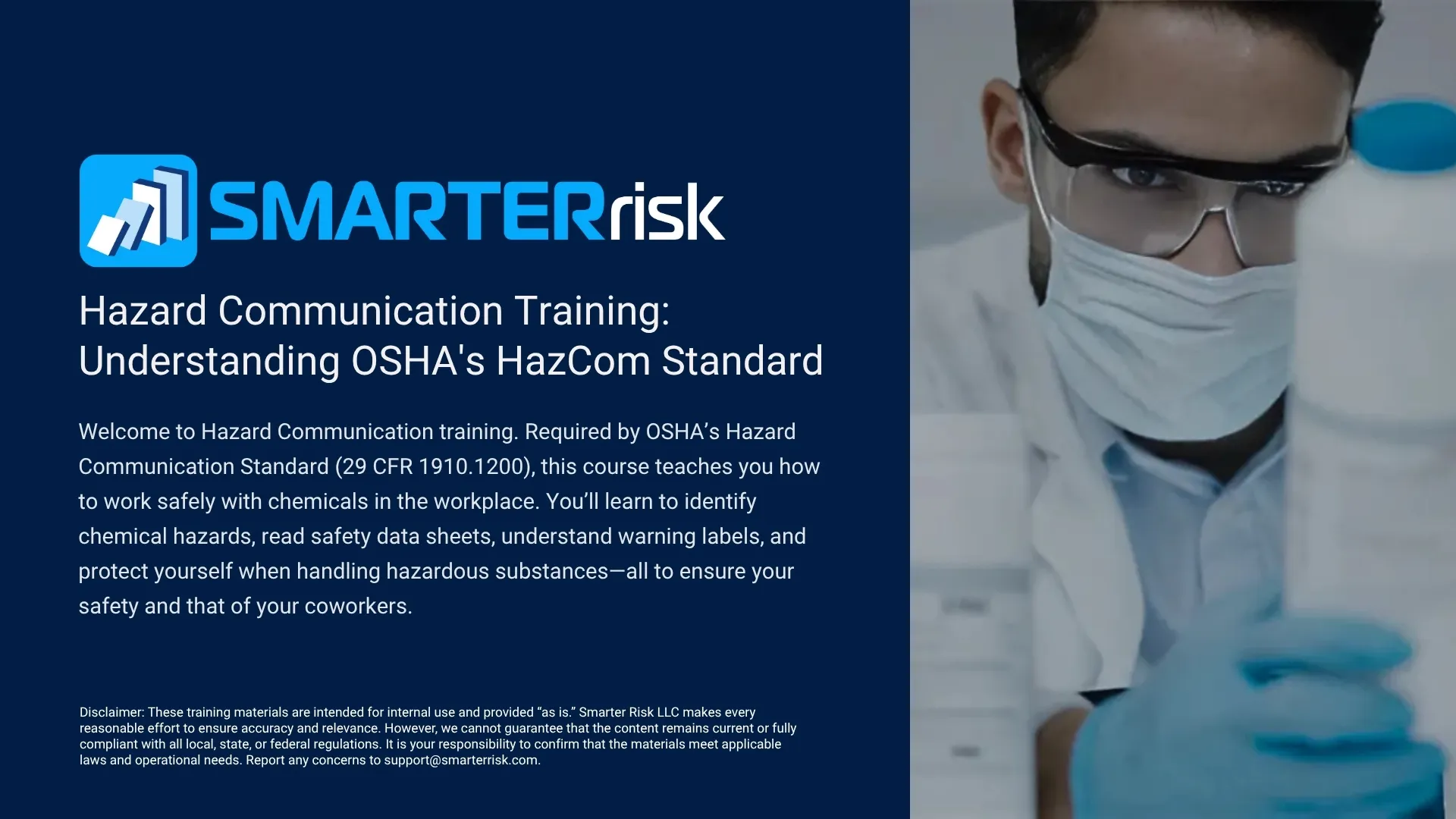
This Hazard Communication Training (HazCom Training) provides employees with the knowledge they need to safely work with hazardous chemicals in the workplace. The course explains the purpose and requirements of the OSHA Hazard Communication Standard and helps workers understand how chemical hazards are identified, communicated, and controlled.
The training covers how to recognize chemical hazards, interpret Safety Data Sheets (SDS), understand GHS labels and pictograms, and follow proper chemical handling and spill response procedures. Employees learn their rights under hazard communication “right-to-know” principles, as well as their responsibilities for reading labels, reviewing SDS information, using required PPE for chemical safety, and reporting unsafe conditions.
This course is designed to support workplace chemical safety by reinforcing standardized hazard communication practices, including container labeling, secondary container labeling, chemical inventories, and written hazard communication programs. It provides the knowledge and awareness component of hazard communication training and is intended for employees who may be exposed to hazardous chemicals as part of their job duties.
This training is designed to help organizations meet OSHA requirements for workplace safety under 29 CFR 1910.1200 (Hazard Communication Standard). It delivers essential safety data sheets training and chemical safety training that supports employer compliance with OSHA’s HazCom requirements. Employers are responsible for ensuring site-specific procedures, hands-on instruction, and any additional requirements applicable to their operations are met.
What You’ll Learn
- The purpose and scope of the Hazard Communication Standard
- How chemical hazards are classified and communicated
- How to read and interpret Safety Data Sheets (SDS)
- The meaning of GHS labels, signal words, and pictograms
- Requirements for container and secondary container labeling
- How chemical inventories and written HazCom programs work
- Proper chemical handling, storage, and spill response basics
- The role of PPE for chemical safety and exposure controls
- Employee rights and responsibilities under hazard communication
Course Details
Duration: 30 minutes
Format: Self Paced Online Training
Assessment: Knowledge quiz with immediate feedback
Certification: Certificate of completion upon passing
Access: Available 24/7 through Training Director LMS
Who Should Take This Course
- Employees who work with or around hazardous chemicals
- Manufacturing, warehouse, construction, and maintenance workers
- Laboratory and facility personnel
- Supervisors responsible for chemical safety oversight
- New hires requiring hazard communication training
- Any employee covered under a workplace Hazard Communication Program
Key Topics Covered
- Hazard Communication Standard overview
- Chemical hazard types and exposure routes
- Safety Data Sheets (SDS) structure and use
- Globally Harmonized System (GHS) basics
- Hazard labels and pictograms
- Container and secondary container labeling requirements
- Chemical inventories and documentation
- Chemical spill procedures and emergency response
- PPE for chemical safety and proper selection
- Employee and supervisor responsibilities
IMPORTANT: This training must be combined with site-specific chemical information, workplace-specific procedures for the hazardous chemicals present in your facility, and all applicable federal, state, and local regulations specific to your operations.
Frequently Asked Questions
How long does the training take?
The course takes approximately 30 minutes to complete. Employees can pause and resume at their convenience.
Is this training OSHA compliant?
This training is designed to help organizations meet OSHA requirements for workplace safety. It covers OSHA 29 CFR 1910.1200 (Hazard Communication Standard) requirements including Safety Data Sheets (SDS), GHS labeling, secondary container labeling, chemical inventories, and employee right-to-know provisions. The course provides the knowledge component of hazard communication training and should be supplemented with site-specific chemical information and workplace-specific procedures.
Do employees receive a certificate?
Yes. Upon successful completion, employees can generate a certificate of completion. All progress is stored and can be accessed in the main dashboard under Learner Report.
How often should employees take this training?
We recommend annual refresher training for all employees who work with hazardous chemicals. Additional training is required when new chemical hazards are introduced to the workplace, when employees change job assignments involving different chemicals, or when the Hazard Communication Program is updated.
Can we track completion?
Yes. Training Director provides real-time tracking of assignments, completion status, and quiz scores, making it easy to verify that all employees have completed their hazard communication training.
What is the difference between SDS and MSDS?
Safety Data Sheets (SDS) replaced Material Safety Data Sheets (MSDS) under the updated Hazard Communication Standard aligned with the Globally Harmonized System (GHS). SDS have a standardized 16-section format that is consistent worldwide, making chemical information easier to find and understand. This training covers the current SDS format and how to read safety data sheets effectively.
What is secondary container labeling?
Secondary container labeling refers to the requirement to label any container into which a hazardous chemical is transferred from its original container. The training explains secondary container labeling requirements, including what information must be included and when labels are required. Proper secondary container labeling is essential for preventing chemical mix-ups and ensuring workers know what chemicals they are handling.
Does this training cover chemical spill procedures?
Yes. The course covers basic chemical spill procedures including immediate response steps, when to evacuate, how to use SDS information during spills, and the importance of reporting spills immediately. However, specific spill response procedures should be addressed in your workplace-specific Hazard Communication Program and emergency response plans. For a deeper dive into chemical spill response and emergency procedures, employees should also complete Emergency Action Plan training. While Hazard Communication training covers spill awareness and immediate response basics, Emergency Action Plan training provides detailed instruction on evacuation, shelter-in-place procedures, alarm systems, and coordinated emergency response.
What is GHS and why does it matter?
The Globally Harmonized System (GHS) is an international standard for classifying and labeling chemicals. GHS training is essential because it standardizes how chemical hazards are communicated through labels and Safety Data Sheets worldwide. The training explains GHS hazard communication elements including pictograms, signal words, hazard statements, and precautionary statements that appear on chemical labels.
What PPE is required for working with hazardous chemicals?
The training covers PPE for chemical safety in detail, including how to use Safety Data Sheets to determine required protection. Common PPE for chemical safety includes chemical-resistant gloves, safety goggles or face shields, chemical-resistant aprons or suits, and respiratory protection when needed. The specific PPE requirements depend on the chemical hazards present, as indicated on the SDS and chemical labels.
Get Started
Hazard Communication Training is included with the Intelligent Plan.
- Sign up - You can begin on the free plan and upgrade when you’re ready to assign courses.
- Complete the company risk assessment (required) - It takes less than 15 minutes. Answer all questions as accurately as possible so we can set up your account correctly.
- Access your dashboard - After submitting the assessment, you’ll be redirected to your dashboard.
- Click Training Director - Start assigning courses to your team.
Related Resources
Related Training Courses
- PPE - Personal Protective Equipment Safety - Comprehensive PPE training including chemical protective equipment and respiratory protection
- Respiratory Protection Training - Respiratory protection for chemical vapors and airborne hazards
- Emergency Action Plan Safety Training - Emergency response procedures including chemical spills and evacuations
Related Blog Posts
- Hazard Communication Policy: Understanding OSHA’s HazCom Standard - Complete guide to building an OSHA-compliant hazard communication program
- Top 10 OSHA Violations: Compliance Guide and Prevention Strategies - OSHA compliance guide including hazard communication violations and prevention
Related Toolbox Talks
- Hazard Communication (HazCom): Chemical Safety and Worker Protection - Essential hazard communication practices and chemical safety fundamentals
- Safety Data Sheets (SDS): What You Need to Know for Chemical Safety - How to read and use Safety Data Sheets effectively
- Labeling and Handling Chemicals Safely: Preventing Accidents and Exposures - Proper chemical labeling and safe handling procedures