Housekeeping Safety Training for Employees
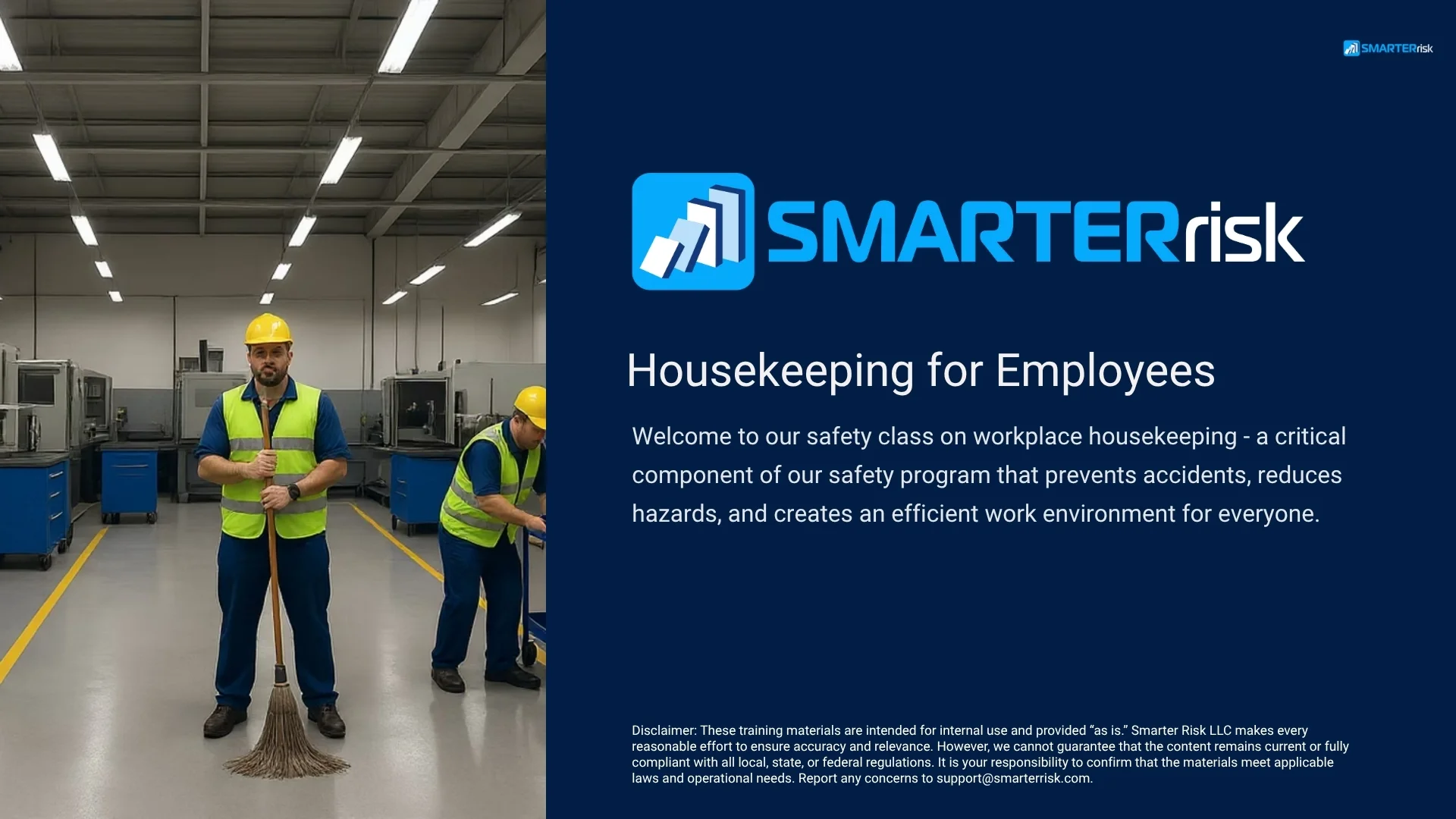
Good housekeeping practices prevent injuries, fires, and emergency access issues. This practical training teaches employees how workplace housekeeping directly impacts safety and what daily habits reduce slip, trip, and fall risks.
The Housekeeping Safety Training from Smarter Risk focuses on identifying common housekeeping hazards, maintaining clean and organized work areas, and following practical expectations that prevent workplace accidents. Employees learn how clutter, poor storage, unaddressed spills, and blocked exits contribute to injuries—and what they must do to keep walkways, workspaces, and storage areas safe.
This training emphasizes employee responsibilities for workplace cleanliness, hazard recognition, and accident prevention. Participants learn practical housekeeping expectations including waste management, tool storage, material handling, and emergency egress clearance. The course provides clear, safety-focused guidance aligned with workplace housekeeping and walking-working surface requirements.
After completing this course, employees will understand why workplace housekeeping is critical to accident prevention, recognize common housekeeping hazards that cause slips, trips, falls, and fires, maintain clean and safe work areas, and follow daily housekeeping habits that reduce workplace safety risks.
What You’ll Learn
- Housekeeping Fundamentals - Why workplace housekeeping is critical to accident prevention
- Hazard Recognition - Common housekeeping hazards that cause slips, trips, falls, and fires
- Egress Safety - How poor housekeeping impacts emergency evacuation and egress safety
- Good Housekeeping Practices - Practical housekeeping practices employees are expected to follow
- Daily Habits - How daily housekeeping habits reduce workplace safety risks
- Walking-Working Surfaces - Maintaining safe walkways, aisles, and work areas
- Storage Safety - Proper tool storage and material storage safety
- Waste Management - Waste management and oily rag disposal procedures
- Fire Prevention - Fire prevention through proper housekeeping
- Employee Responsibilities - Employee responsibilities for maintaining clean and safe work areas
Course Details
Duration: 10 minutes
Format: Self Paced Online Training
Assessment: Knowledge quiz with immediate feedback
Certification: Certificate of completion upon passing
Access: Available 24/7 through Training Director LMS
Who Should Take This Course
- Employees working in industrial, commercial, or general workplace environments
- Warehouse, manufacturing, and shop personnel
- Office and facility staff responsible for shared workspaces
- New hires receiving safety orientation
- Any employee whose job involves tools, materials, storage areas, or walkways
Frequently Asked Questions
How long does the training take?
The course takes approximately 10 minutes to complete. Employees can complete the training in one session or return to finish at their convenience.
Is this training OSHA compliant?
This training is designed to help organizations meet OSHA requirements for workplace safety. It covers OSHA 29 CFR 1910.22 (Walking-Working Surfaces) requirements and supports employer compliance with OSHA’s General Duty Clause regarding workplace housekeeping and hazard prevention.
Do employees receive a certificate?
Yes. Upon successful completion, employees can generate a certificate of completion. All progress is stored and accessible in the main dashboard under Learner Report.
How often should employees take this training?
We recommend annual refresher training, with immediate training for new hires during safety orientation. Additional training should be provided when housekeeping issues are identified or after incidents related to poor housekeeping.
Can we track completion across our workforce?
Yes. Training Director provides real-time tracking of assignments, completion status, and quiz scores for all employees.
Does this training cover 5S methodology?
This training focuses on safety-focused housekeeping practices and hazard prevention. While it covers workplace organization principles, it does not teach formal 5S lean manufacturing methodology. The emphasis is on practical workplace safety implementation, not lean systems.
What housekeeping hazards does this training address?
The training covers slip, trip, and fall hazards, blocked emergency exits and egress routes, improper material storage, fire hazards from combustible waste and oily rags, cluttered walkways and aisles, spills and wet surfaces, and poor lighting in work areas.
Is this appropriate for office environments?
Yes. While the training includes industrial examples, the housekeeping safety principles apply to all workplace environments including offices, warehouses, shops, and facilities. Good housekeeping practices prevent accidents in any work setting.
Get Started
Housekeeping Safety Training is included with the Intelligent Plan.
- Sign up - You can begin on the free plan and upgrade when you’re ready to assign courses.
- Complete the company risk assessment (required) - It takes less than 15 minutes. Answer all questions as accurately as possible so we can set up your account correctly.
- Access your dashboard - After submitting the assessment, you’ll be redirected to your dashboard.
- Click Training Director - Start assigning courses to your team.
Related Resources
Related Training Courses
- Slip and Fall and Non-Slip Shoe Policy Training - Footwear requirements and slip/fall prevention
- Emergency Action Plan Training - Emergency procedures and evacuation routes
- Fire Safety and Fire Extinguisher Training - Fire prevention and emergency response
Related Blog Posts
- Fire Safety: Your Firewall Against Rising Insurance Costs - Fire prevention through proper housekeeping and inspections
- Emergency Action Plan: Essential Guide for Workplace Preparedness - Emergency procedures including egress and evacuation
Related Toolbox Talks
- Housekeeping: A Simple Way to Prevent Accidents - Essential housekeeping practices for accident prevention
- Preventing Slips, Trips, and Falls - Comprehensive slip, trip, and fall prevention strategies
- Slip and Fall Prevention on the Job - Walking surface safety and traction hazards