Liquid Propane Gas (LPG) Safety Training
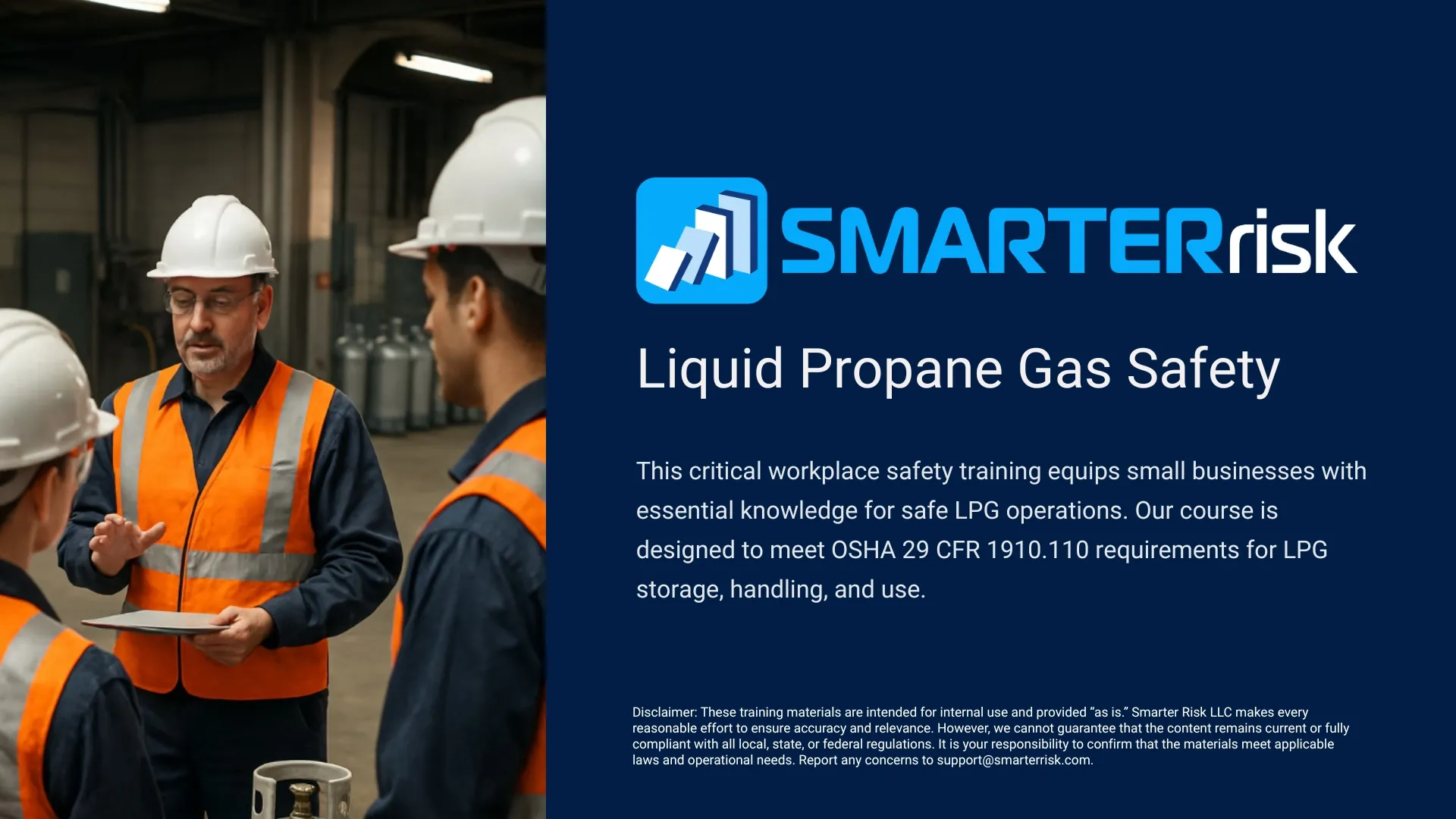
Liquid propane gas (LPG) presents unique workplace hazards including fire, explosion, cold burns, and oxygen displacement. This training provides employees with essential knowledge for the safe storage, handling, and use of propane in workplace environments.
The Liquid Propane Gas Safety Training from Smarter Risk focuses on hazard recognition, accident prevention, and safe work practices associated with liquefied petroleum gas operations. Employees learn why propane presents unique risks and how propane behaves differently than other fuels. The training explains how leaks are identified, what conditions increase the risk of serious incidents, and why improper handling can lead to severe injuries.
The course covers practical safety requirements for propane cylinders and tanks, including proper storage locations, separation distances, ventilation considerations, labeling, and inspection practices. Learners are introduced to safe handling procedures, refueling precautions, PPE requirements, and emergency response actions for leaks, fires, or exposure incidents.
This training is designed to support employer safety programs and align with OSHA 29 CFR 1910.110 and NFPA 58 expectations by providing the knowledge component of propane safety. It does not certify employees to perform specialized tasks such as cylinder filling, equipment repair, or firefighting. Employers are responsible for ensuring site-specific procedures, hands-on instruction, equipment-specific training, and any additional requirements applicable to their operations are met.
What You’ll Learn
- Propane Properties - Propane and LPG properties that create fire and explosion hazards
- Leak Detection - How to recognize propane leaks, vapor release, and emergency warning signs
- Safe Practices - Safe propane storage, handling, and use practices
- Cylinder Safety - Cylinder and tank safety requirements including storage and transport
- PPE Requirements - PPE expectations when working with LPG
- Emergency Response - Emergency response for leaks, fires, and exposure
- Fire Prevention - Fire and explosion prevention including BLEVE awareness
- Common Mistakes - Common propane safety mistakes and how to prevent them
- Storage Requirements - Propane gas storage requirements and separation distances
- Forklift Safety - Propane forklift safety considerations
Course Details
Duration: 20 minutes
Format: Self Paced Online Training
Assessment: Knowledge quiz with immediate feedback
Certification: Certificate of completion upon passing
Access: Available 24/7 through Training Director LMS
Who Should Take This Course
- Employees who work with or around propane or LPG systems
- Warehouse and industrial workers using propane-powered equipment
- Maintenance, operations, and facilities personnel
- Supervisors responsible for propane safety awareness
- Organizations using propane for heating, fueling, or industrial processes
- Anyone who handles, stores, or works near propane cylinders or tanks
Key Regulations Covered
This training addresses compliance requirements from:
- OSHA 29 CFR 1910.110 - Storage and Handling of Liquefied Petroleum Gases
- NFPA 58 - Liquefied Petroleum Gas Code
IMPORTANT: This training must be combined with site-specific procedures, hands-on instruction for equipment operation and refueling, and all applicable federal, state, and local regulations specific to your facility and propane operations.
Frequently Asked Questions
How long does the training take?
The course takes approximately 20 minutes to complete. Employees can complete the training in one session or break it into multiple sessions at their convenience.
Is this training OSHA compliant?
This training is designed to help organizations meet OSHA requirements for workplace safety. It covers OSHA 29 CFR 1910.110 and NFPA 58 requirements for propane safety, storage, handling, and emergency response. The training supports employer compliance with propane safety standards. Employers are responsible for ensuring site-specific procedures, hands-on instruction, equipment-specific training, and any additional requirements applicable to their operations and propane equipment are met. This training provides foundational knowledge but does not certify employees to fill cylinders, repair equipment, or perform specialized propane operations.
Do employees receive a certificate?
Yes. Upon successful completion, employees can generate a certificate of completion. All progress is stored and accessible in the main dashboard under Learner Report.
How often should employees take this training?
We recommend annual refresher training, with immediate training for new employees who work with or around propane. Additional training should be provided when new equipment is introduced, procedures change, or after propane-related incidents.
Can we track completion across our workforce?
Yes. Training Director provides real-time tracking of assignments, completion status, and quiz scores for all employees.
Does this training certify employees to fill propane cylinders?
No. This training provides general propane safety awareness and does not certify employees to fill cylinders, repair propane equipment, or perform specialized operations. Cylinder filling requires specialized training, certification, and hands-on instruction from qualified personnel. Employers must provide equipment-specific and task-specific training for specialized propane operations.
What is BLEVE and why is it covered?
BLEVE (Boiling Liquid Expanding Vapor Explosion) is a catastrophic failure that can occur when a propane tank is exposed to fire or extreme heat. The training covers BLEVE awareness to help employees understand why propane tanks must be protected from fire exposure and why immediate evacuation is critical when propane tanks are involved in fires.
Does this cover propane forklift safety?
Yes. The training includes propane forklift safety considerations including refueling procedures, ventilation requirements, and safe handling of propane cylinders used for forklift fuel. However, forklift operators must also complete forklift-specific operator training and certification. Smarter Risk offers a comprehensive Forklift Safety Training course that covers powered industrial truck operation, inspection, and certification requirements.
Get Started
Liquid Propane Gas Safety Training is included with the Intelligent Plan.
- Sign up - You can begin on the free plan and upgrade when you’re ready to assign courses.
- Complete the company risk assessment (required) - It takes less than 15 minutes. Answer all questions as accurately as possible so we can set up your account correctly.
- Access your dashboard - After submitting the assessment, you’ll be redirected to your dashboard.
- Click Training Director - Start assigning courses to your team.
Related Resources
Related Training Courses
- Fire Safety and Fire Extinguisher Training - Fire prevention and emergency response procedures
- Compressed Gas Cylinder Safety Training - Safe handling of compressed gas cylinders
- Forklift Safety Training - Powered industrial truck operation including propane forklifts
Related Blog Posts
- Fire Safety: 9 Tips to Reduce Insurance Costs - Fire prevention strategies including flammable material safety
- Emergency Action Plan: Essential Guide for Workplace Preparedness - Emergency procedures including fire and hazardous material response
Related Toolbox Talks
- LPG Handling and Storage: Propane Safety for Small Businesses - Propane/LPG fuel gas safety covering safe handling, storage, and leak detection
- Flammable Liquids Storage and Handling - Safe storage and handling of flammable materials
- Fire Safety Basics - Workplace fire prevention and emergency response
- Aboveground Fuel Storage Tanks - Safe handling and storage of fuel systems