Kitchen Safety and Food Service Training
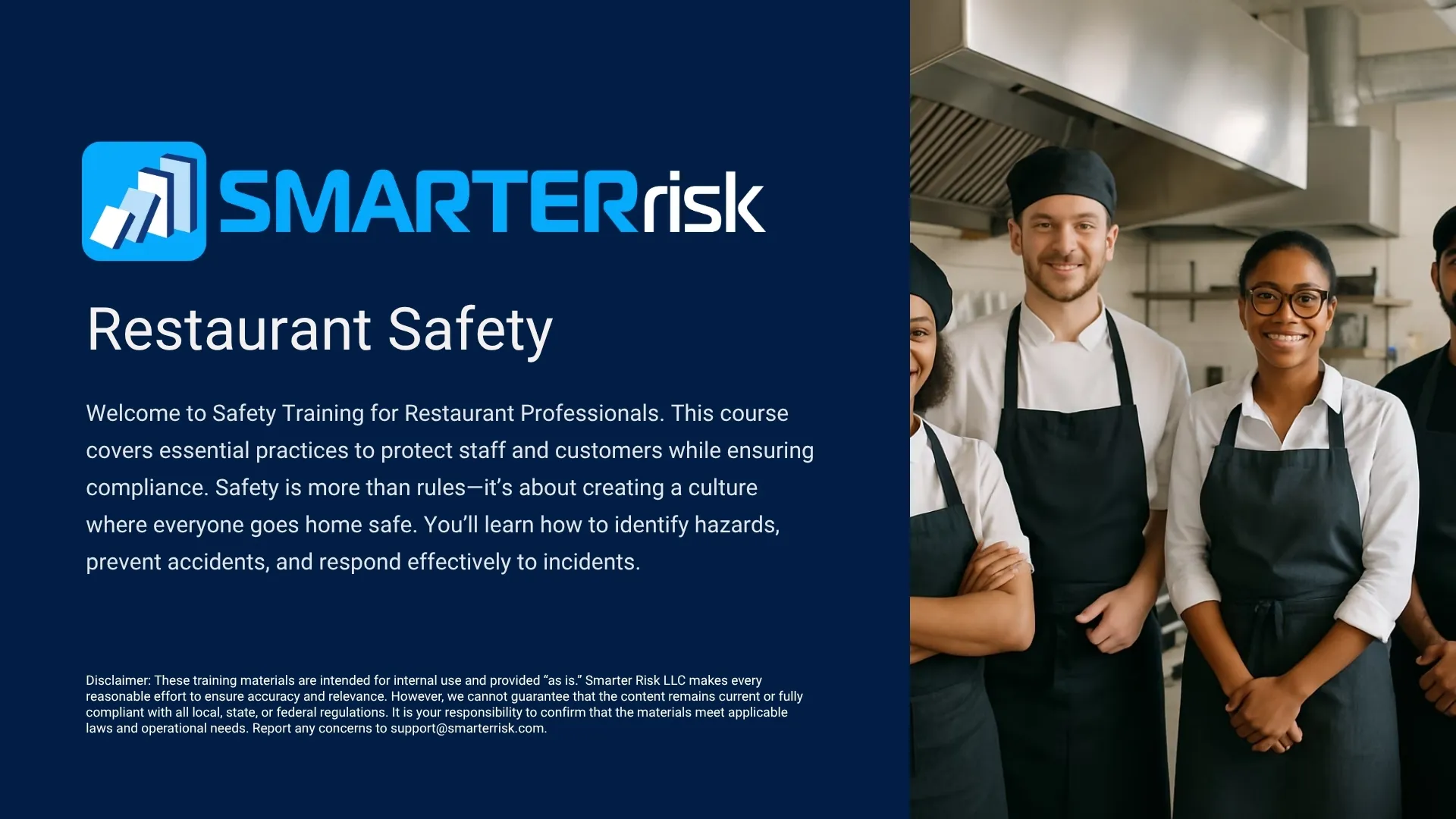
Commercial kitchen environments present a unique combination of workplace hazards, including slip and fall risks, fire exposure, chemical handling, food safety concerns, and potential manual lifting injuries. This Kitchen Safety Training course provides employees with a practical understanding of the most common restaurant safety hazards and the controls used to prevent injuries, property damage, and food safety incidents.
The training focuses on hazard recognition, safe work practices, and employee responsibilities across core safety areas such as slip trip fall prevention, fire safety, food handling, chemical safety, and proper lifting techniques. It is designed to support workplace safety training programs by reinforcing awareness, prevention, and response expectations in commercial kitchen and food service environments.
This course provides safety awareness for both front of house and back of house employees. It does not replace site-specific training, hands-on instruction, or regulatory compliance obligations. Employers remain responsible for ensuring compliance with applicable OSHA standards, local health department requirements, and food safety regulations.
What You’ll Learn
- Slip Trip Fall Prevention - How slip trip fall hazards occur and why non slip shoes and slip resistant footwear are critical for injury prevention
- Fire Safety Fundamentals - Kitchen fire suppression systems, Class K fire extinguishers, and the fire extinguisher PASS method
- Food Safety Principles - Cross contamination prevention, allergen awareness, hand hygiene, and temperature control
- Proper Lifting Techniques - Manual lifting safety practices to reduce back injuries
- Chemical Safety - Hazard communication training, HazCom principles, Safety Data Sheets (SDS), and safe chemical handling
- Incident Response - How to respond to workplace incidents, report injuries, and support a proactive safety culture
- Grease Fire Safety - Recognizing and responding to grease fire hazards
- Equipment Safety - Safe operation of kitchen equipment including fryers and hot surfaces
- Burn Prevention - Preventing burns from hot equipment, liquids, and steam
- Spill Response - Proper procedures for cleaning spills and maintaining floor safety
Course Details
Duration: 50 minutes
Format: Self Paced Online Training
Assessment: Knowledge quiz with immediate feedback
Certification: Certificate of completion upon passing
Access: Available 24/7 through Training Director LMS
Who Should Take This Course
- Kitchen staff, cooks, and food preparation employees
- Dishwashers, servers, and support staff working in kitchen environments
- Supervisors and managers responsible for workplace safety training
- Employees exposed to slip hazards, hot equipment, cleaning chemicals, or food safety risks
- New hires in restaurant and food service operations
- Any employee working in commercial kitchen environments
Key Topics Covered
- Kitchen safety hazards and injury prevention
- Slip trip fall prevention and floor safety
- Non slip shoes and slip resistant footwear requirements
- Fire safety training and grease fire prevention
- Fire suppression systems and Class K fire extinguishers
- Fire extinguisher PASS method
- Food safety training and cross contamination prevention
- Allergen awareness and temperature control for food safety
- Proper lifting techniques and back injury prevention
- Hazard communication training and SDS training
- Chemical handling safety and spill response basics
- Incident response, documentation, and safety culture fundamentals
- Burn prevention and equipment safety
- Knife safety and cut prevention
- Emergency exit routes and evacuation procedures
Key Regulations Covered
This training addresses requirements from:
- OSHA 29 CFR 1910 - General Industry Standards (Walking-Working Surfaces, Hazard Communication, PPE)
- OSHA 29 CFR 1910.157 - Portable Fire Extinguishers
- OSHA 29 CFR 1910.1200 - Hazard Communication Standard
Frequently Asked Questions
How long does the training take?
The course takes approximately 50 minutes to complete. Employees can complete the training in one session or break it into multiple sessions at their convenience.
Is this training OSHA compliant?
This training is designed to help organizations meet OSHA requirements for workplace safety. It covers OSHA 29 CFR 1910 requirements for walking-working surfaces, hazard communication, fire safety, and personal protective equipment. Employers are responsible for ensuring site-specific procedures, food safety compliance, health department requirements, and any additional requirements applicable to their operations are met. This training provides foundational knowledge but does not replace site-specific safety training or food safety certification programs.
Do employees receive a certificate?
Yes. Upon successful completion, employees can generate a certificate of completion. All progress is stored and accessible in the main dashboard under Learner Report.
How often should employees take this training?
We recommend annual refresher training at minimum, with immediate training for new employees. Retraining should occur when new hazards are introduced, procedures change, or when incidents reveal inadequate knowledge.
Can we track completion across our workforce?
Yes. Training Director provides real-time tracking of assignments, completion status, and quiz scores for all employees.
Does this training cover food safety certification?
No. This training covers workplace safety hazards in kitchen environments, including some food safety awareness topics like cross contamination prevention and temperature control. It does not replace food handler certification, ServSafe training, or other food safety certification programs required by local health departments. Organizations should provide both workplace safety training and food safety certification as appropriate.
What are slip resistant shoes and why are they required?
Slip resistant shoes (also called non slip shoes) have specialized outsoles designed to provide better traction on wet, greasy, or slippery surfaces common in commercial kitchens. They are critical for slip trip fall prevention because kitchen floors are frequently wet from spills, cleaning, and food preparation. Many employers require slip resistant footwear as part of their workplace safety program.
What is a Class K fire extinguisher?
A Class K fire extinguisher is specifically designed for kitchen fires involving cooking oils, grease, and fats. These fires burn at extremely high temperatures and cannot be safely extinguished with water or standard ABC extinguishers. Class K extinguishers use a special agent that cools the fire and creates a barrier to prevent re-ignition. All commercial kitchens should have Class K fire extinguishers readily accessible.
Get Started
Kitchen Safety Training is included with the Intelligent Plan.
- Sign up - You can begin on the free plan and upgrade when you’re ready to assign courses.
- Complete the company risk assessment (required) - It takes less than 15 minutes. Answer all questions as accurately as possible so we can set up your account correctly.
- Access your dashboard - After submitting the assessment, you’ll be redirected to your dashboard.
- Click Training Director - Start assigning courses to your team.
Related Resources
Related Training Courses
- Fire Safety and Fire Extinguisher Training - Comprehensive fire safety training covering fire extinguisher use and PASS technique
- Hazard Communication Training - Understanding OSHA’s HazCom Standard - Complete HazCom training including SDS and chemical safety
- Ergonomics, Manual Material Handling, and Safe Lifting Practices - Proper lifting techniques and back injury prevention
- PPE - Personal Protective Equipment Safety - Proper PPE use including slip resistant footwear and protective equipment
Related Blog Posts
- Slip and Fall Risk: Proven Strategies to Prevent Workplace Accidents - Comprehensive slip and fall prevention strategies including footwear requirements
- Fire Safety: Your Firewall Against Workplace Fires - Complete fire safety program including kitchen fire prevention
Related Toolbox Talks
- Slip and Fall Prevention on the Job - Essential slip and fall prevention strategies for all work environments
- Fire Extinguisher Use: PASS Technique and Emergency Response - Proper fire extinguisher use including PASS technique
- Fire Safety Basics: Workplace Fire Prevention and Emergency Response - Essential fire safety basics and emergency response