Spray Booth Safety Training - Paint Booth and Coating Operations
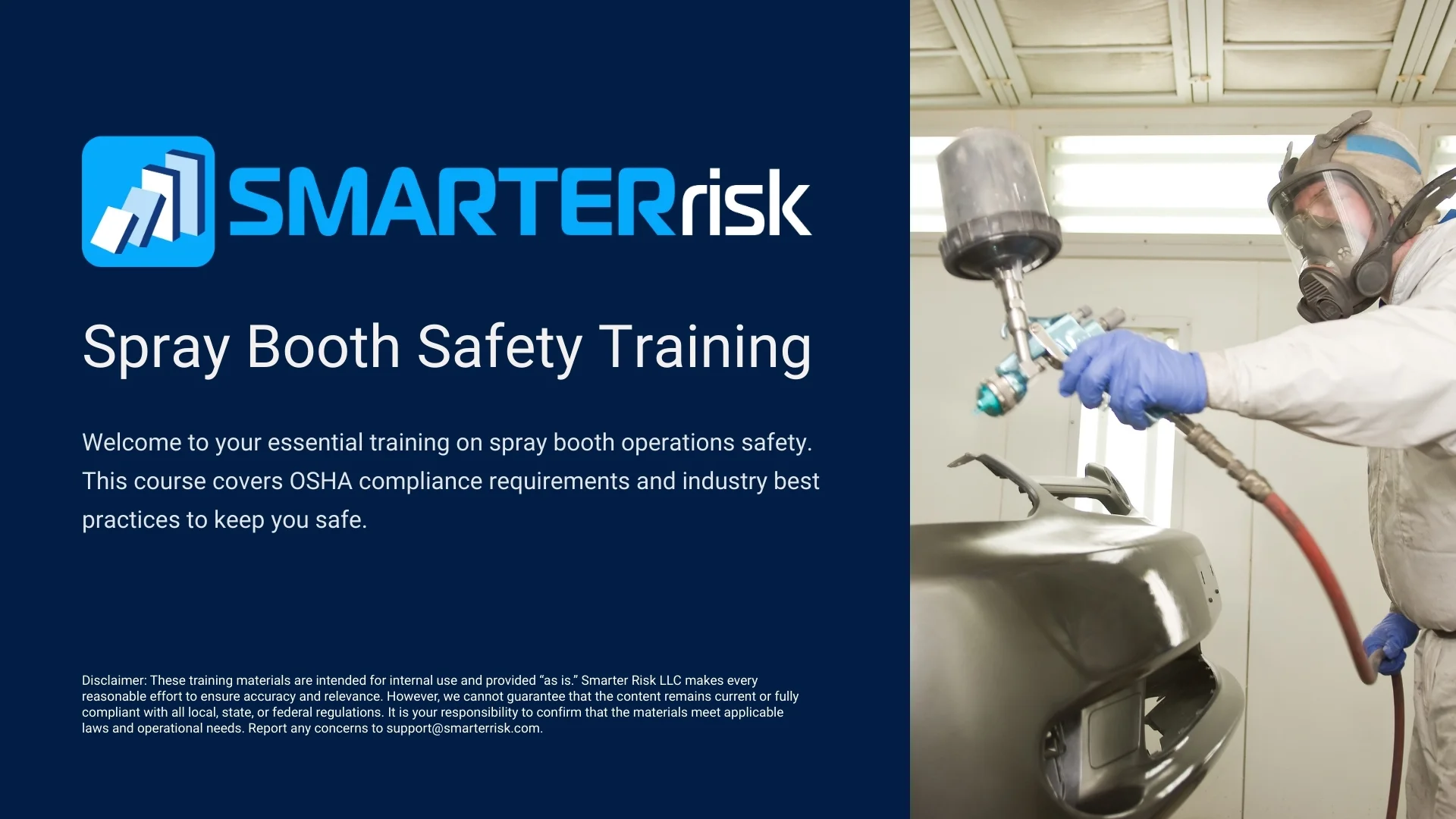
Spray Booth Safety Training provides employees with a clear understanding of the hazards, controls, and safe work practices required when performing paint spraying operations in spray booths and paint booths. The course focuses on preventing fires, explosions, toxic exposures, and equipment-related incidents commonly associated with flammable vapors, ignition sources, and improperly controlled spray environments.
This training explains how fire safety systems, fire suppression equipment, exhaust systems, and electrical safety controls work together to reduce risk during spray finishing operations. Employees learn why proper ventilation, explosion-proof equipment, grounding and bonding, and safe handling of flammable materials are critical to maintaining a safe spray booth environment.
The course also addresses personal protective equipment requirements, including respiratory protection, protective equipment selection, and exposure controls to reduce chemical exposure during paint spraying activities. Emphasis is placed on recognizing unsafe conditions, following established procedures, and understanding how static electricity, ignition sources, and improper storage can contribute to serious incidents.
This training supports workplace safety programs by delivering the knowledge and awareness component of spray booth safety. It does not replace equipment-specific installation requirements, fire code enforcement, or hands-on operational qualification. Employers are responsible for ensuring compliance with all applicable NFPA standards, local fire codes, state regulations, equipment manufacturer requirements, and OSHA standards specific to their spray booth operations. Employers must provide equipment-specific training, hands-on instruction, and site-specific procedures before employees operate spray booths.
What You’ll Learn
- Spray Booth Hazards - Common spray booth hazards, including fire, explosion, and chemical exposure risks
- Fire Safety - Fire safety principles related to spray booths, including fire extinguishers and fire suppression systems
- Ventilation Systems - Ventilation and exhaust system requirements for controlling flammable vapors
- Electrical Safety - Electrical safety considerations, including explosion-proof equipment and grounding and bonding
- Personal Protective Equipment - Proper use of personal protective equipment and respiratory protection
- Chemical Handling - Safe handling and storage of paints, solvents, and other chemicals
- Ignition Sources - How static electricity and ignition sources contribute to spray booth incidents
- Safety Inspections - Inspection, housekeeping, and maintenance practices that support safe operations
- Fire Suppression - Fire suppression system awareness and emergency response
- Chemical Storage - Proper chemical storage and flammable material handling
Course Details
Duration: 30 minutes
Format: Self Paced Online Training
Assessment: Knowledge quiz with immediate feedback
Certification: Certificate of completion upon passing
Access: Available 24/7 through Training Director LMS
Who Should Take This Course
- Employees performing paint spraying or spray finishing operations
- Workers assigned to spray booths or paint booths
- Maintenance personnel responsible for spray booth systems
- Supervisors overseeing spray booth safety and compliance
- Safety personnel supporting fire codes, NFPA standards, and OSHA compliance efforts
- Any employee working in or around coating operations
Key Topics Covered
- Spray booth fire safety and explosion prevention
- Fire extinguishers and fire suppression system awareness
- Ventilation and exhaust systems
- Electrical safety and hazardous location considerations
- Explosion-proof equipment requirements
- Static electricity and ignition source control
- Chemical storage and flammable material handling
- Personal protective equipment and respiratory protection
- Safety inspections, housekeeping, and safe work practices
- Paint spraying hazards and controls
- Grounding and bonding requirements
- NFPA standards and fire codes awareness
Key Regulations Covered
This training addresses requirements from:
- OSHA 29 CFR 1910.94 - Ventilation
- OSHA 29 CFR 1910.107 - Spray Finishing Using Flammable and Combustible Materials
- NFPA 33 - Standard for Spray Application Using Flammable or Combustible Materials
Frequently Asked Questions
How long does the training take?
The course takes approximately 30 minutes to complete. Employees can complete the training in one session or break it into multiple sessions at their convenience.
Is this training OSHA compliant?
This training is designed to help organizations meet OSHA requirements for spray booth safety. It covers OSHA 29 CFR 1910.94 and 1910.107 requirements for ventilation, spray finishing operations, and hazard controls. Employers are responsible for ensuring compliance with all applicable NFPA standards, local fire codes, state regulations, equipment manufacturer requirements, and OSHA standards specific to their spray booth operations. This training provides foundational knowledge but does not replace equipment-specific training, hands-on instruction, fire code inspections, or site-specific procedures required by authorities having jurisdiction.
Do employees receive a certificate?
Yes. Upon successful completion, employees can generate a certificate of completion. All progress is stored and accessible in the main dashboard under Learner Report.
How often should employees take this training?
We recommend annual refresher training at minimum, with immediate training for new employees. Retraining should occur when new equipment is installed, procedures change, or when incidents reveal inadequate knowledge.
Can we track completion across our workforce?
Yes. Training Director provides real-time tracking of assignments, completion status, and quiz scores for all employees.
Does this training certify employees to operate spray booths?
No. This training provides safety awareness and foundational knowledge about spray booth hazards and safe work practices. Employers must provide equipment-specific training, hands-on instruction, site-specific procedures, and formal authorization before employees operate spray booths. Spray booth operations require understanding of specific equipment controls, fire suppression systems, and emergency procedures unique to each installation.
What is explosion-proof equipment and why is it required?
Explosion-proof equipment is designed to contain any internal explosion and prevent ignition of flammable vapors in the surrounding atmosphere. In spray booth environments where flammable vapors are present, standard electrical equipment can create sparks or heat that ignite vapors, causing fires or explosions. Explosion-proof lighting, switches, and electrical components are required in spray booth areas to eliminate ignition sources and comply with NFPA standards and electrical codes for hazardous locations.
What personal protective equipment is required for spray booth operations?
PPE requirements vary based on specific materials used and exposure levels. Common spray booth PPE includes respiratory protection (supplied-air respirators or appropriate cartridge respirators), eye and face protection, chemical-resistant gloves, and protective clothing. Employers must conduct exposure assessments and provide appropriate respiratory protection based on the specific coatings, solvents, and chemicals used. This training covers PPE awareness; employers must provide specific PPE training and fit testing as required.
Get Started
Spray Booth Safety Training is included with the Intelligent Plan.
- Sign up - You can begin on the free plan and upgrade when you’re ready to assign courses.
- Complete the company risk assessment (required) - It takes less than 15 minutes. Answer all questions as accurately as possible so we can set up your account correctly.
- Access your dashboard - After submitting the assessment, you’ll be redirected to your dashboard.
- Click Training Director - Start assigning courses to your team.
Related Resources
Related Training Courses
- Fire Safety and Fire Extinguisher Training - Comprehensive fire safety training covering fire extinguisher use and fire prevention
- Hazard Communication Training - Understanding OSHA’s HazCom Standard - Complete HazCom training including chemical safety and SDS
- Respiratory Protection Training - Proper respiratory protection use and fit testing requirements
- PPE - Personal Protective Equipment Safety - Proper PPE use including protective equipment for chemical exposure
Related Blog Posts
- Fire Safety: Your Firewall Against Workplace Fires - Complete fire safety program including fire prevention and emergency response
- Hazard Communication Policy: Understanding OSHA’s HazCom Standard - Comprehensive HazCom policy guide covering chemical safety and labeling
Related Toolbox Talks
- Spray Booth Safety - Essential spray booth safety guidelines covering ventilation and explosion prevention
- Flammable Liquids Storage and Handling - Safe storage and handling of flammable materials
- Fire Safety Basics: Workplace Fire Prevention and Emergency Response - Essential fire safety basics and emergency response