Working at Heights Safety Training
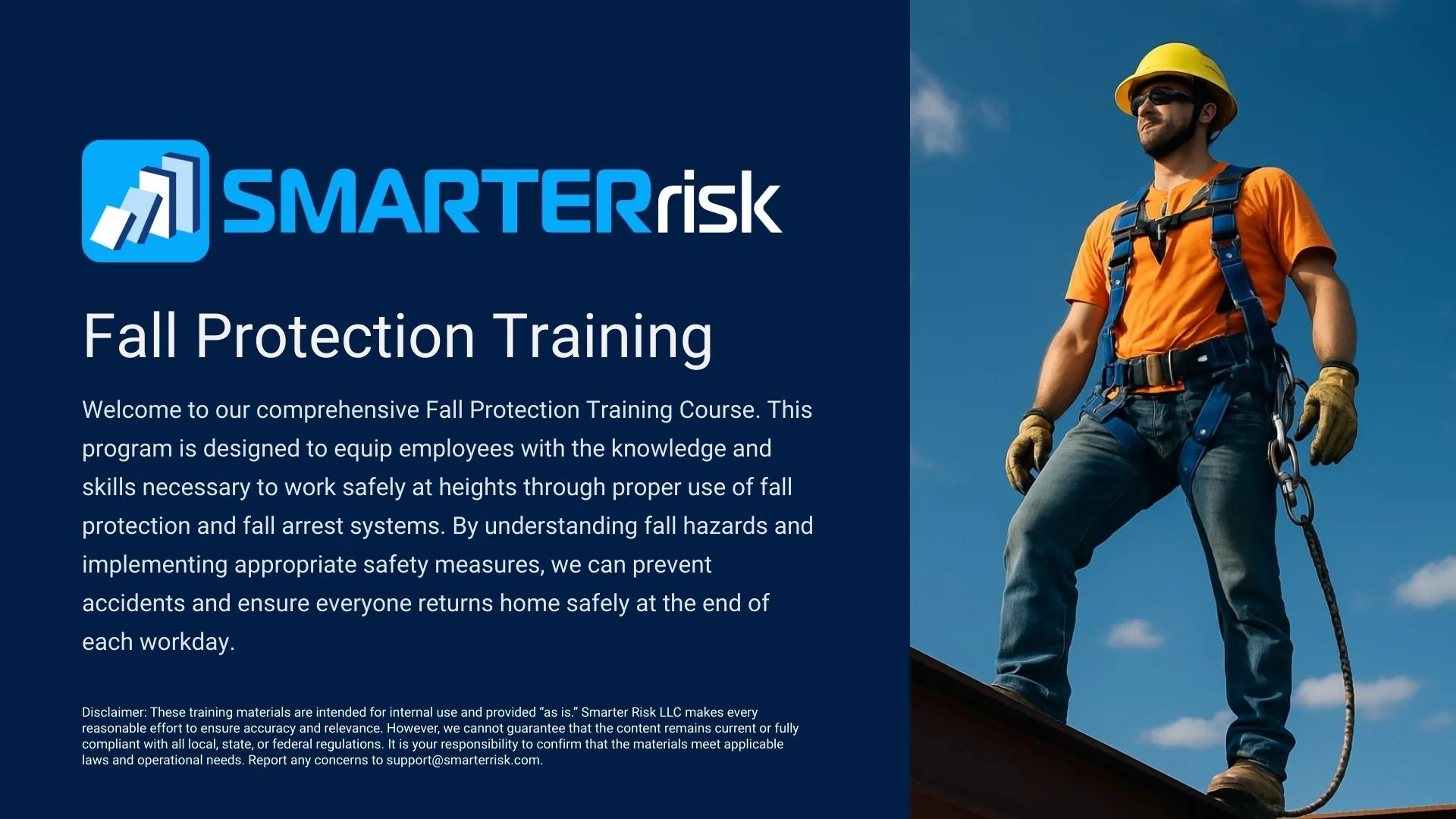
Working at Heights Safety Training provides employees with a clear, practical understanding of how to identify fall hazards and safely perform work at elevation. The course focuses on real-world conditions where falls occur, including roof work, scaffolding, floor openings, powered lift platforms, and areas with unprotected edges.
The training explains how fall protection systems work, when they are required, and how to select and use them correctly. Employees learn the differences between passive protection such as guardrails and active systems such as personal fall arrest equipment, along with the limitations of each. Emphasis is placed on planning work safely before exposure occurs rather than reacting after hazards are present.
This course also covers inspection, anchorage selection, fall clearance, swing fall prevention, and rescue planning. It is designed to support employer safety programs by providing consistent, defensible training for anyone exposed to fall hazards while working at heights.
CRITICAL DISCLAIMER: This training delivers knowledge and awareness and does NOT replace hands-on instruction, equipment-specific authorization, competent person designation, or site-specific training required by employers. Employers MUST pair this training with practical demonstrations, equipment fitting and inspection training, site-specific fall protection plans, rescue procedures, and any applicable federal, state, or local regulations. Working at heights requires comprehensive planning, proper equipment selection, and on-site supervision by designated competent persons.
What You’ll Learn
- Recognize fall hazards - Identify common fall hazards in construction, maintenance, and industrial environments including unprotected edges, floor openings, and elevated work areas
- Understand protection requirements - Learn when fall protection is required including the 6-foot rule, special conditions, and industry-specific standards
- Distinguish protection systems - Understand the differences between guardrails, warning lines, fall restraint, and fall arrest systems and when each is appropriate
- Use personal fall arrest equipment - Learn proper use and inspection of harnesses, lanyards, anchors, and self-retracting lifelines
- Calculate fall clearance - Understand how to calculate fall clearance distances and reduce swing fall hazards
- Work safely on scaffolds - Apply safe practices for scaffolding, mobile scaffolds, ladders, and powered lift platforms
- Inspect equipment - Conduct proper inspection of fall protection equipment and identify when equipment must be removed from service
- Plan for rescue - Understand why rescue planning is required and how suspension trauma impacts response time
- Select proper anchorage - Identify suitable anchor points and understand anchorage strength requirements
- Prevent swing falls - Recognize swing fall hazards and implement positioning strategies to minimize lateral movement during a fall
Course Details
Duration: 70 minutes
Format: Self Paced Online Training
Assessment: Knowledge quiz with immediate feedback
Certification: Certificate of completion upon passing
Access: Available 24/7 through Training Director LMS
Who Should Take This Course
- Employees who work at heights or near fall hazards
- Construction and maintenance workers
- Scaffold and lift users
- Roofing and exterior building maintenance personnel
- Supervisors responsible for jobsite safety
- Safety coordinators and competent persons
- Anyone exposed to fall hazards 6 feet or greater
Frequently Asked Questions
How long does the training take?
The Working at Heights Safety Training course takes approximately 70 minutes to complete. Employees can work at their own pace and pause as needed.
Is this training OSHA compliant?
This training is designed to help organizations meet OSHA requirements for workplace safety. It covers OSHA 29 CFR 1926.501 (fall protection in construction) and 1926.503 (fall protection training) requirements including hazard recognition, protection systems, equipment use, and inspection procedures.
IMPORTANT: Employers are responsible for ensuring hands-on instruction, equipment-specific training, competent person designation, site-specific fall protection plans, rescue procedures, and any additional requirements applicable to their operations are met. This training provides knowledge-based instruction only and must be supplemented with practical application, equipment fitting, and on-site supervision.
Do employees receive a certificate?
Yes, employees receive a certificate of completion upon successfully passing the course assessment. Certificates are available for download immediately and include the employee’s name, course title, completion date, and training duration.
How often should employees take this training?
OSHA requires fall protection training when employees are first assigned to work involving fall hazards and retraining when changes in the workplace render previous training obsolete or when inadequacies in knowledge are observed. Annual refresher training is recommended as a best practice, with more frequent updates when equipment, procedures, or work conditions change.
Can we track completion?
Yes, the Training Director LMS provides comprehensive tracking and reporting. Administrators can view completion status, quiz scores, certificate downloads, and time spent on training. Reports can be filtered by employee, department, or date range for easy compliance documentation.
Does this training authorize employees to use fall protection equipment?
No. This training provides foundational knowledge about fall protection systems and safe work practices, but it does not by itself authorize employees to use fall protection equipment. Employers must provide hands-on training with the specific equipment employees will use, ensure proper fit and adjustment of harnesses, demonstrate inspection procedures, and verify competency before authorizing equipment use.
What about equipment-specific training and fitting?
This training covers general fall protection principles and equipment categories. Employers MUST supplement this training with hands-on instruction for the specific equipment employees will use, including proper donning and adjustment of harnesses, inspection procedures for their equipment, connection methods for their specific systems, and rescue procedures applicable to their work sites. Personal fall arrest equipment must be properly fitted to each individual user.
Does this training qualify someone as a competent person?
No. This training provides knowledge about fall protection requirements and competent person responsibilities, but it does not by itself qualify someone as a competent person. OSHA requires competent persons to have specific training and demonstrated ability to identify fall hazards and take prompt corrective action. Employers must designate competent persons based on their knowledge, training, and experience specific to fall protection and elevated work.
Get Started
Working at Heights Safety Training is included with the Intelligent Plan.
- Sign up - You can begin on the free plan and upgrade when you’re ready to assign courses.
- Complete the company risk assessment (required) - It takes less than 15 minutes. Answer all questions as accurately as possible so we can set up your account correctly.
- Access your dashboard - After submitting the assessment, you’ll be redirected to your dashboard.
- Click Training Director - Start assigning courses to your team.
Related Resources
Related Training Courses
- Ladder Safety Training - Essential ladder safety training covering proper selection, inspection, setup, and safe climbing practices
- PPE - Personal Protective Equipment Safety - Complete PPE training including hard hats, safety footwear, and protective equipment for elevated work
- Confined Space Safety Training - Essential training for confined space entry including rescue planning and atmospheric hazards
Related Blog Posts
- Top 10 OSHA Violations: Compliance Guide and Prevention Strategies - Complete guide to OSHA’s most frequently cited violations including fall protection, scaffolding, and ladder safety
- Safety Made Simple: A Step-by-Step Guide to Building Your Safety Program - Comprehensive guide to developing hazard-specific policies including working at heights procedures
Related Toolbox Talks
- Preventing Falls from Heights - Essential strategies for fall prevention and hazard recognition
- Guardrails and Fall Protection Basics - Detailed guide to passive fall protection systems and proper guardrail construction
- Scaffold Safety and Daily Inspections - Critical inspection procedures for scaffold safety and competent person responsibilities